
A fresh debate has erupted over the management of the Greater Accra Resilient and Integrated Development (GARID) Project after policy analyst Michael Kwasi Aidoo mounted a detailed defence of the previous New Patriotic Party (NPP) administration’s handling of the World Bank funded programme.
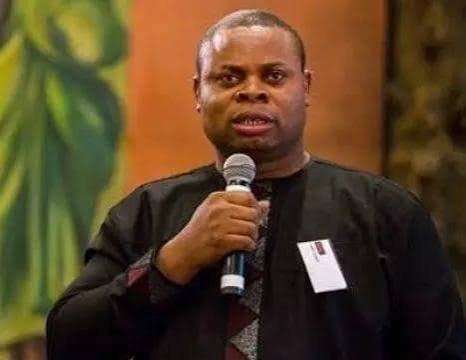
In a lengthy Facebook post, Aidoo took issue with recent comments by founding President of IMANI Africa, Franklin Cudjoe, accusing him of presenting what he described as a misleading account of how funds under the GARID Project were utilised.
According to Aidoo, Cudjoe’s criticism overlooks the strict supervision mechanisms that govern every World Bank funded project and unfairly portrays legitimate project expenditures as financial impropriety.
The GARID Project, financed by the World Bank, was designed to strengthen flood risk management and improve resilience in vulnerable communities across the Greater Accra Region. In recent weeks, questions have resurfaced over how project funds were allocated during the previous administration, particularly the proportion spent on training, consultancy services and project preparation compared to physical flood mitigation works.
However, Aidoo argues that such criticism ignores the way international development projects are structured.
He explained that World Bank funded projects operate under comprehensive procurement rules, financial controls, environmental safeguards and regular supervision by the Bank itself. Every expenditure, he said, whether on consultancy services, technical studies, training programmes or operational logistics, must receive prior approval from the World Bank before funds can be disbursed.
For that reason, he rejects suggestions that spending on project preparation should be interpreted as evidence of waste or misuse.
Referring to figures cited by Franklin Cudjoe, Aidoo noted that approximately US$22.1 million was reportedly spent on training, US$7.9 million on consultancy services and US$1.68 million on vehicles.
Far from constituting waste, he argued, these expenditures represent standard components of virtually every large World Bank infrastructure project.
According to him, technical studies, engineering designs, environmental assessments, community consultations and institutional capacity building are prerequisites that must be completed before major construction activities can begin.
“You cannot build flood channels before undertaking the necessary feasibility studies, environmental assessments and technical designs,” he argued.
Aidoo further challenged claims that the previous administration diverted GARID funds during the COVID-19 pandemic.
He pointed out that the reallocation of approximately US$60.8 million for emergency COVID-19 interventions in 2020 was approved by the World Bank itself under provisions that allow development funds to be redirected during major global emergencies.
He argued that if there had been any misuse of those resources, the World Bank’s own monitoring systems, financial audits and fiduciary controls would have identified and reported such irregularities.
According to him, no such evidence has been produced.
The Facebook post also sought to defend former Sanitation Minister Cecilia Abena Dapaah, whose handling of aspects of the GARID Project has been the subject of public criticism.
Aidoo contended that available evidence does not support claims that she mismanaged World Bank resources under the programme.
He also questioned Franklin Cudjoe’s interpretation of project implementation timelines.
While acknowledging that only a relatively small proportion of the original funding had gone directly into physical flood control works during the early years of the project, Aidoo maintained that this reflected the normal lifecycle of complex infrastructure programmes rather than administrative failure.
In his view, the groundwork undertaken under the Akufo-Addo administration made it possible for subsequent governments to accelerate construction once the preparatory phase had been completed.
He therefore described what some have celebrated as a policy shift under the current administration as simply the next stage of implementation.
According to Aidoo, it is contradictory to criticise one administration for investing in preparatory activities while simultaneously praising another administration for commencing construction made possible by those very preparations.
“The preliminaries made the construction phase possible,” he argued, insisting that the two stages should be viewed as complementary rather than competing achievements.
Drawing comparisons with previous governments, Aidoo also referenced the World Bank funded Greater Accra Metropolitan Area (GAMA) Sanitation and Water Project implemented during the National Democratic Congress administration.
He noted that while the World Bank reportedly rated that project as “Moderately Satisfactory,” reports by Ghana’s Auditor-General highlighted instances of incomplete works and contractor challenges.
He questioned whether similar standards of public criticism had been applied at the time.
The policy analyst further challenged Franklin Cudjoe to explain what major flood mitigation infrastructure the current National Democratic Congress administration has initiated in Greater Accra since assuming office.
He also cited the Accra Sanitary Sewer and Stormwater Drainage Alleviation Project (CONTI), arguing that substantial sums were reportedly spent on studies and consultancy services during the NDC administration without corresponding physical infrastructure being delivered before the government left office.
For Aidoo, these comparisons expose what he considers selective criticism directed at the previous NPP administration.
Perhaps his strongest challenge was directed at the evidence underpinning allegations of financial impropriety.
He called on Franklin Cudjoe to produce a single World Bank audit report concluding that GARID funds were misused.
Until such evidence is presented, Aidoo argued, allegations of financial misconduct remain unsubstantiated.
He maintained that the World Bank’s multilayered procurement, auditing and supervision systems are specifically designed to ensure transparency and accountability throughout the implementation of donor funded projects.
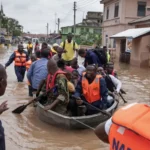
Concluding his Facebook post, Aidoo shifted attention to the continuing threat of flooding in the capital, arguing that political debates should not overshadow the urgency of protecting lives and property.
He warned that delays in implementing flood control interventions carry serious human consequences and urged policymakers to focus on completing ongoing projects rather than engaging in what he described as politically motivated narratives.
He also credited successive NPP administrations under former Presidents John Agyekum Kufuor and Nana Addo Dankwa Akufo-Addo with implementing major drainage projects in communities including Dzorwulu, Odawna, Achimota, Nima and the Tetteh Quarshie area, arguing that those investments have contributed significantly to improving flood resilience across parts of Greater Accra.
As discussions over the GARID Project continue, Aidoo’s intervention has added another perspective to an increasingly contentious national conversation, one that is likely to persist as questions over infrastructure delivery, donor funding and flood management remain firmly in the public spotlight.