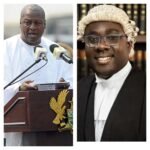
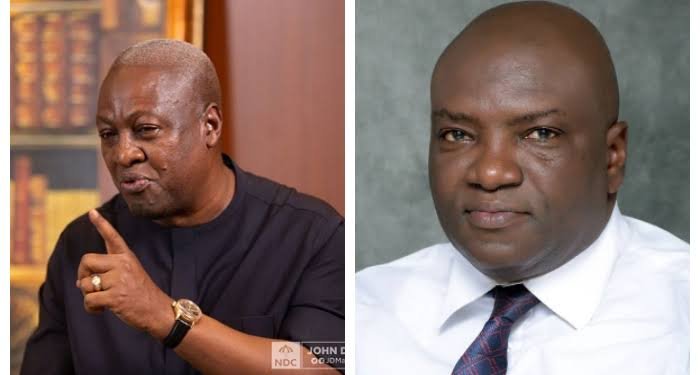

On June 30, 2026, veteran journalist and New Patriotic Party (NPP) member Kenneth Kuranchie walked into Ghana’s Supreme Court with a writ that could reshape the country’s political future. His petition challenges the conventional understanding of Article 66 (2) of the 1992 Constitution, which has long been interpreted as capping presidential service at two terms. Kuranchie insists the clause applies only to consecutive terms, and that once a president leaves office for a full four-year cycle, eligibility resets.
At the heart of his argument lies a bold constitutional claim: that the framers of the 1992 Constitution never intended to bar non-consecutive presidencies. He is asking the court to declare that the two-term limit applies only when a leader serves back-to-back terms, and that a break in service effectively wipes the slate clean. If the judges agree, President John Dramani Mahama—who served from 2012 to 2017 and returned in 2025—could legally seek a third term in 2028.
The Attorney-General, Dominic Ayine, has been named as the defendant, tasked with defending the prevailing interpretation that Ghana’s presidency is capped at two terms, consecutive or not. Constitutional scholars and political figures have already lined up on both sides of the debate. Some argue Kuranchie’s reading undermines the spirit of the Constitution, which was designed to prevent entrenched power. Others say the text leaves room for interpretation, and the Supreme Court must now decide.
The political implications are enormous. Mahama himself has publicly dismissed any third-term ambitions, pledging to step down after his current tenure. Yet the mere possibility of an extension has unsettled Ghana’s political class. The National Democratic Congress (NDC) Council of Elders has rejected any talk of prolonging Mahama’s stay, warning against premature campaigns. Within the NPP, voices have grown louder, cautioning that tampering with the two-term limit risks destabilizing Ghana’s democratic safeguards. Prominent lawyer Gabby Otchere-Darko has gone further, warning the Supreme Court against altering the constitutional balance, stressing that stability is the bedrock of Ghana’s democracy.
This case is more than a legal battle—it is a test of Ghana’s constitutional resilience. A ruling in Kuranchie’s favor would set a precedent, opening the door for future leaders to return after breaks in service, and potentially reshaping the rhythm of presidential succession. A rejection would reaffirm the strict two-term cap, reinforcing Ghana’s reputation as one of Africa’s most stable democracies.