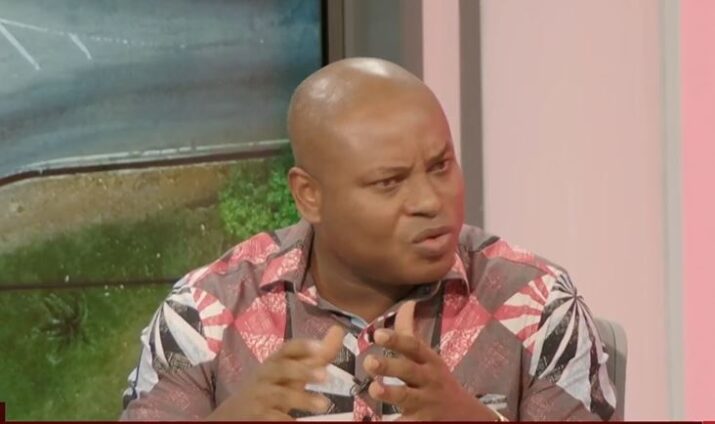

The Director of Communications of the NPP, Richard Ahiagbah, has defended the right of citizens to freely express their views, warning that Ghana must reject what he describes as a growing “politics of insult.”
Speaking on PM Express on Joy News on Tuesday, he argued that the controversy surrounding recent comments by a political appointee raises deeper concerns about democratic culture and the tolerance of dissent.
“We must have a broader conversation about politics of insult, because that’s what this is about, attacking and disrespecting someone simply because they’re expressing their views,” he said.
His remarks come in the wake of public backlash over comments widely seen as dismissive of a citizen’s right to contribute to national discourse.
The incident triggered an emotional apology from the Chief of Staff, a development Ahiagbah says reflects a wider national rejection of such conduct.
“If we want to achieve the kind of quality governance that we want to gain from the democratic process… then we must engage in a conversation that prioritises ideas that allow citizens to come to the arena and share their views,” he stressed.
Mr Ahiagbah pointed to the Chief of Staff’s public apology as significant, suggesting it signals that even the highest levels of government recognise the problem.
“To the extent that the Chief of Staff himself will have to take the mic, and apologise… it demonstrates how all of us Ghanaians reject the politics of insult,” he said.
But he insisted that an apology alone is not enough. According to him, accountability must follow if Ghana is to draw a clear line against conduct that intimidates citizens.
“The next step… is for him to consider removing [her] from a post. That is the only way we can mark this moment and say that never again,” he stated.
Mr Ahiagbah argued that failure to act decisively risks normalising behaviour that undermines democratic participation.
He warned that any attempt by political actors to silence citizens, regardless of status or background, contradicts constitutional protections.
“Especially when it involves a citizen who has every right protected by this constitution to express their views… for a political operative to intimidate them… that recklessness must be marked,” he said.
While acknowledging the Chief of Staff’s apology as unexpected and commendable, he maintained that stronger action would send a clearer message.
“That will be instructive. That will be telling all Ghanaians loud and clear that the political class appreciates input from all citizens,” he noted.
He concluded with a firm defence of inclusivity in national discourse.
“It doesn’t matter if they are Chief Priests of a shrine, or they are the bishop or their Reverend… they are, first of all, a citizen whose voice must not be silenced.”
Source: myjoyonline.com