

I was once a vocal critic of the previous administration and, to some extent, a sympathizer of this government when it was in opposition.
What I do today is largely driven by disappointment.
This administration has not impressed me.
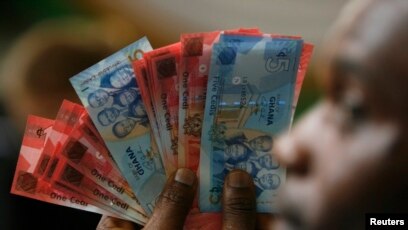
I understand why many Ghanaians believe this government is doing extremely well. The macroeconomic numbers explain that perception. Inflation has fallen significantly. The cedi has appreciated remarkably over the past year. Ex pump fuel prices are relatively lower, offering some relief to households and businesses.
On the surface, there are enough reasons for someone like me to be satisfied.
Yet, I am deeply disappointed.
The core issue is simple. I do not see anything fundamentally different between this administration and the previous one. In fact, when we cast our minds back, the previous administration arguably performed better within its first year in office.
It introduced ideas that were clearly out of the ordinary. Beyond macroeconomic stability, Free SHS emerged as a bold flagship policy. The moratorium on small scale mining in the fight against galamsey was a daring decision for a new government. Major road and infrastructure works were ongoing. The Ghana Card rollout by the National Identification Authority remains one of the most impactful reforms this country has seen in recent times.
2017 is not ancient history. We remember it clearly.
Now to the present administration and its shortcomings.
First, the failure to implement its flagship policy is very concerning, After reading two budgets, the 24 hour economy still exists only in speeches. It was meant to support businesses through time of use tariffs and create jobs under the promise of 1 job, 3 shifts and 3 people.
Today, not a single person can confidently say they were employed through that policy.
Electricity tariffs have rather increased. Households and businesses that paid about GH¢1,000 last year are now paying over GH¢1,300 for the same consumption.
Second, unemployment remains severe. Over 1.3 million young people are unemployed, according to the Ghana Statistical Service. This government Promised automatic posting of trained teachers and also the Minister of Education pledged to recruit 50,000 teachers and 10,000 non teaching staff by end year 2025 which still remains unfulfilled.
Third, the fight against galamsey has effectively been lost. The government appears overly obsessed with gold accumulation to support the cedi, even at the expense of our water bodies and biodiversity.
There is still no credible track and traceability mechanism to determine the source of the gold being purchased today by Sammy Gyamfi Goldbod. This narrow focus ignores the long term environmental damage the country will pay for.
On the legal front, the sheer disregard for the rule of law and natural justice displayed by this administration is sickening.
Many of the excesses this administration accused the previous government of have been replicated, and in some cases amplified, within a year.
The NDC in opposition consistently accused the NPP of packing the bench with party loyalists to undermine fair adjudication. Yet it took them less than a year to outstrip the judicial appointments made by Akufo Addo in four years.
It is instructive to note that the current dispensation made 65 judicial appointments within months of assuming office across the various jurisdictions.
They cried their eyes out over the removal of the former Electoral Commission Chairperson, Madam Charlotte Osei, and her immediate deputies, yet went ahead to maliciously remove the Chief Justice over inconsequential reasons and in an opaque manner that undermined her fundamental human rights.
This has set a very bad precedent. We risk making the Chief Justice, the apex of the Judiciary, a political appointee subject to executive control, just like ministers.
That precedent weakens judicial independence and poses serious risks to our democracy. Future governments may exploit similar loopholes to remove justices deemed inconvenient.
The situation surrounding the Kpandai parliamentary seat, the High Court ruling, and attempts to override due process further raise questions about respect for the rule of law.
This administration has not unified the country. If anything, it mirrors a harsher version of what it once condemned.
The Attorney General’s office feels like a media theatre, trying cases in the public space before charges are even properly laid.
Selective justice has become the norm where political opponents are persecuted here and there. The Attorney Generale lost it when he offered nolle prosequi for party allies and is aggressively pursuing new targets. This undermines public confidence and rule of law.
All these excesses cast a long shadow.
They do not inspire hope.
They do not build trust.
Ghanaians may not fully see it yet, but many will learn the hard way that this administration is not fundamentally different from the previous one.
In fact, even if intentions are debated, the previous administration was stronger in ideas. That point is difficult to dispute.