
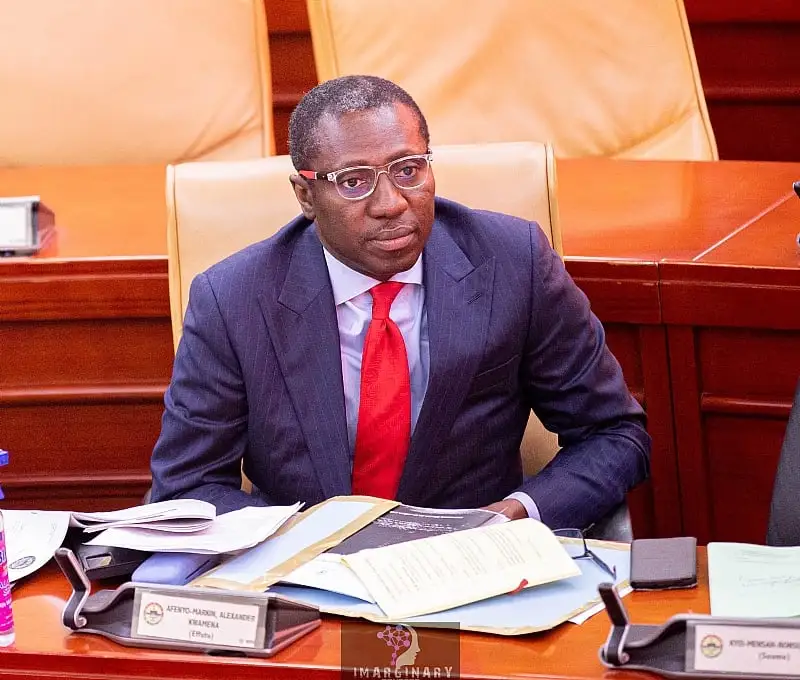

The Minority Leader in Ghana’s 9th Parliament, Alexander Afenyo-Markin, has criticised government’s declaration of two national cleaning days as an inadequate response to the recurring floods in Accra, describing the initiative as a short-term gesture that fails to address the structural causes of the crisis.
Afenyo-Markin argued that while desilting drains and clearing refuse may provide temporary relief, the flooding problem is rooted in poor urban planning, weak enforcement of building regulations, and inadequate drainage infrastructure. He stressed that successive governments have failed to invest in comprehensive flood management systems, leaving Accra vulnerable each rainy season.
“Flooding is not about cleaning drains once or twice. It is about proper planning, enforcement, and investment in infrastructure,” he stated, adding that the declaration of Friday and Saturday as National Days of Cleaning cannot substitute for long-term engineering solutions.
The Minority Leader further criticised the government’s approach as reactive and politically expedient, noting that the floods have become an annual tragedy claiming lives and destroying property. He urged the Interior Ministry, the Ministry of Works and Housing, and city authorities to prioritise drainage expansion, relocation of settlements on waterways, and strict enforcement of environmental laws.
Afenyo-Markin also linked the issue to broader governance failures, pointing to the government’s flagship 24-Hour Economy Policy, which promised jobs and improved infrastructure but has not translated into tangible results. He warned that without serious investment in flood control, Accra will continue to suffer devastating floods regardless of clean-up campaigns.
His remarks echo concerns raised by urban planners and civil society organisations, who have long argued that desilting drains and clean-up exercises are short-term measures. Experts say Accra’s rapid urbanisation, coupled with encroachment on wetlands and floodplains, has overwhelmed existing drainage systems.
For many residents, the flooding crisis has become a symbol of government inaction and misplaced priorities. There is a growing frustration within Parliament and the public over the lack of a coherent flood management strategy.