
For months before his second term, President John Mahama and the NDC warned Ghanaians: high government spending was choking progress and driving inflation.
Led by its flagbearer, the NDC argued that inflation was the enemy, and that curbing it would ease cost of living and free money for accelerated infrastructure development never seen before.
Ghanaians listened. Greater Accra, home to millions chasing opportunity, gave Mahama and the NDC the mandate they sought.
And Mahama delivered exactly what finance ministries preach and rating agencies reward on paper: he tightened the taps. Disbursements were capped, accounts were swept and contractors seeking payments for work done were told to wait.
On paper, it worked like a textbook. Headline inflation fell from 23.5% in January 2025 to 3.8% by January 2026. Petrol prices dropped and the cedi appreciated against the dollar. On paper, fiscal discipline appeared to have won.
But at what cost?
While the numbers looked clean, Greater Accra told a different story — one that exposed the human price of inflation control.
GARID, the project the government paused
The Greater Accra Resilient and Integrated Development Project, GARID, is a $350m World Bank-funded project started under the Akufo-Addo administration. Its job was simple: to reduce flood risk, fix solid waste management, upgrade drains, and strengthen emergency response. In short, the project was to prepare Accra to tackle the perennial rains that hit the city every year.
But in the name of controlling inflation, GARID became collateral damage. Funding was ready, but the donor, World Bank, was more anxious to disburse than the government was to spend.
And by May 2026, the World Bank, which was funding the project, had rated GARID’s progress “moderately unsatisfactory” — not for lack of money, but for lack of cash flow.
“The implementation of GARID has been significantly constrained by fiscal measures introduced by the Ministry of Finance during 2025,” the World Bank’s May 2026 update stated.
The Finance Ministry didn’t just cap disbursements, it swept GH₵13.8m from GARID’s account. Interim Payment Certificates (IPC) went unpaid and contractors stalled. Only after World Bank pressure did government process $10.5m in February, return the GH₵13.8m it swept from the project’s a count, and request reallocation.
Notwithstanding, the World Bank’s verdict was damning: “These actions have partially eased liquidity constraints but have not fully addressed the financing gap affecting works implementation.”
The rains, the floods, the exposé
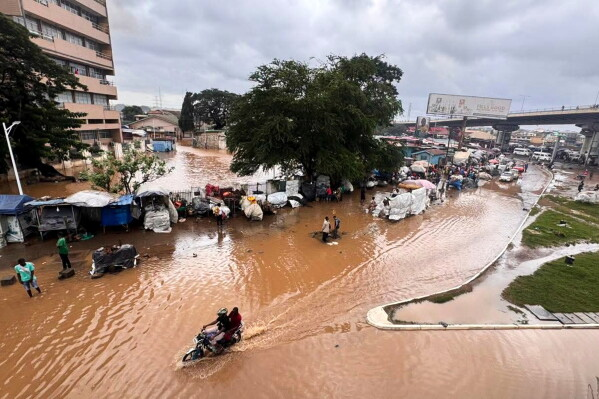
A little over a month later, on June 29, 2026, Greater Accra flooded, with thousands displaced. Lives were lost, property destroyed and businesses ruined – exactly what GARID was designed to help prevent.
If a World Bank-funded project with money in the bank could stall this badly, what happens to 100% GoG projects? Roads, hospitals, salaries, allowances — all competing with the same caps. These are the costs inflation charts don’t capture.
Every unpaid IPC isn’t just a project delay. It’s a blow to households and businesses waiting on that work.
Fiscal discipline vs costly neglect
No one disputes the need for fiscal discipline and low inflation. But discipline without delivery is just neglect. What’s the point of single-digit inflation if essential infrastructure can’t be delivered because funding is capped?
GARID was too critical for Accra to be treated like wasteful spending. Tightening spending to curb waste is smart economics. But refusing to fund flood defenses in the capital, while spending on projects of lesser urgency, is not.
You can’t cut funding for flood control, delay contractors, then boast about inflation. That’s like a father starving his children to grow his bank balance. The “savings” always come at a cost. For nations, that cost is paid in water, in ruins, in lives.
As the World Bank warned and Ghana has now learned, the real cost of keeping inflation down by not paying contractors isn’t in budget tables. It’s in contractor claims, procurement delays, cost overruns, and flooded streets.
Macroeconomic stability isn’t just low inflation. It is resilient cities with good roads and drains that work when it rains. It’s paying contractors on time so the work is done before the clouds gather to give real meaning to macroeconomic gains.
Source: myjoyonline.com