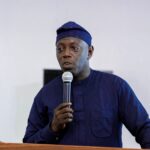


The political atmosphere in Ghana’s road sector has reached a boiling point following a clinical rebuttal by the former Minister for Roads and Highways, Francis Asenso-Boakye. For weeks, the current Minister, Governs Kwame Agbodza, has dominated the headlines with claims that he “cannot find” the 13,000 kilometres of road works reported by the Akufo-Addo administration. However, in a move that has effectively exposed the flaws in this narrative, Mr Asenso-Boakye has laid out the granular data that reveals the current administration’s claims to be based on selective definitions rather than a lack of physical infrastructure.
At the center of this exposure is a fundamental disagreement over what constitutes a “road project.” During a recent parliamentary briefing, Mr Agbodza asserted that only 673km of “new” construction could be verified. This narrow focus, as Asenso-Boakye pointed out, is a deliberate attempt to ignore the massive upgrades to the existing 78,000km national network. In the engineering world, a road is not only “new” when it is built from scratch; it is a vital intervention when it is rehabilitated, reconstructed, or upgraded to meet modern standards.
Mr Asenso-Boakye’s detailed “receipts” for the 13,624km of work completed between 2017 and June 2024 leave little room for ambiguity:
1,955 km of Asphalt overlays
6,185 km of Gravelling
2,538 km of Upgrading
1,665 km of Rehabilitation
273 km of Reconstruction
1,006 km of other critical interventions
By breaking down these figures, the former Minister has exposed the current administration’s “search” for roads as a political smokescreen. For the resident in an urban center, an asphalt overlay is a tangible improvement that facilitates trade and reduces vehicle maintenance costs. For the rural farmer, the 6,185km of gravelling is a literal lifeline. To classify these essential works as “non-existent” simply because they do not fit a narrow “greenfield” definition is a disservice to the millions of Ghanaians benefiting from them daily.
The record of the NPP administration, as highlighted by Asenso-Boakye, remains unprecedented in the Fourth Republic. While the NDC administration between 2009 and 2016 completed approximately 4,636 km of road works, the NPP has nearly tripled that output in a similar timeframe. Even the ofankor-nsawam road, which Mr Agbodza has attempted to use as a point of contention, stands as a project that was actively prioritised and funded under Asenso-Boakye’s tenure to resolve a decade-long bottleneck.
In providing these specific coordinates and project types, Francis Asenso-Boakye has successfully shifted the burden of proof. If the current Ministry truly cannot find these 13,000 kilometres of work, the failure lies not in the data, but in the audit itself. For the objective observer, the evidence remains on the ground—in the overlays, the interchanges, and the gravel paths that continue to define the NPP’s superior infrastructure legacy.