
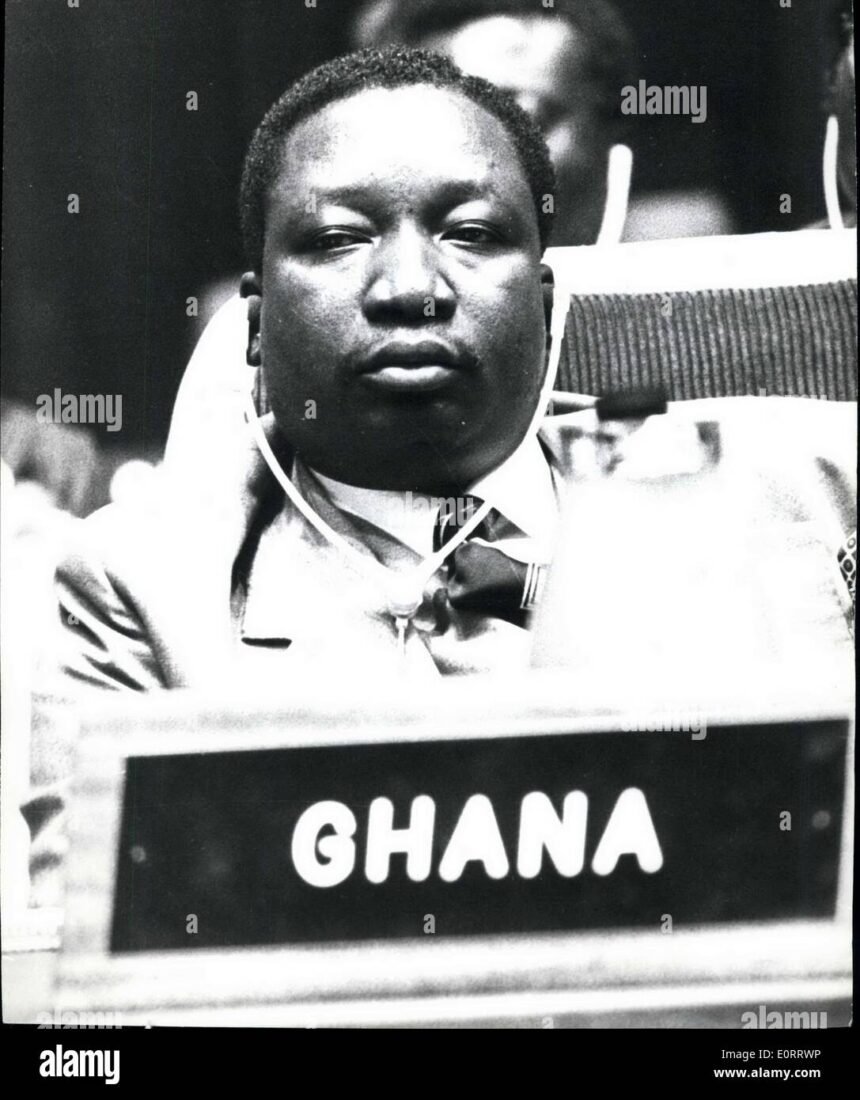

Nearly five decades after one of the darkest episodes in Ghana’s post independence history, the execution of Colonel Roger Joseph Felli continues to provoke reflection on justice, accountability and the cost of political upheaval.
Yesterday marked exactly 47 years since Col. Felli, then Ghana’s Minister for Foreign Affairs, was executed by firing squad alongside five other senior military officers during the Armed Forces Revolutionary Council (AFRC) era.
The executions, carried out on June 26, 1979 at the Teshie Military Range in Accra, followed the June 4 uprising led by Flight Lieutenant Jerry John Rawlings, which overthrew the Supreme Military Council II government. The AFRC justified the executions as part of what it described as a “house cleaning exercise” aimed at rooting out corruption, abuse of office and indiscipline within the military and the political establishment.
At just 38 years old, Col. Felli was the youngest of the six senior officers executed that day. His death has remained one of the most discussed aspects of the June 1979 executions, largely because of the circumstances that led to his arrest and eventual conviction.
Following the June 4 uprising, Col. Felli was in his hometown of Navrongo in the Upper East Region. According to historical accounts, he had the opportunity to leave the country but declined, insisting he had committed no offence that warranted fleeing Ghana.
Instead, he travelled back to Accra and voluntarily surrendered himself to the military authorities.
His decision has often been cited by those who believe he expected to clear his name through the legal process rather than evade justice.
Like several senior military officers and officials of the previous administration, Col. Felli appeared before a Special Military Tribunal established by the AFRC. He faced charges including corruption, treason and abuse of public office.
The tribunal eventually found him guilty and sentenced him to death.
On the morning of June 26, 1979, Col. Felli was led to the Teshie Military Range together with Lieutenant General Frederick William Akuffo, the immediate past Head of State, Lieutenant General Akwasi Amankwaa Afrifa, Major General Robert Ebenezer Abossey Kotei, Air Vice Marshal George Yaw Boakye and Rear Admiral Joy Kobla Amedume.
The six officers were tied to execution stakes before being executed by firing squad, bringing to an end one of the most dramatic chapters in Ghana’s military history.
Following the executions, their bodies were buried in unmarked graves, a decision that deepened the pain of their families and fuelled public debate for many years.
The issue resurfaced more than two decades later after the New Patriotic Party assumed office under President John Agyekum Kufuor.
In 2001, the Kufuor administration established the National Reconciliation Commission to investigate human rights abuses committed under successive military governments. The Commission heard testimony from victims, relatives and former state officials as part of efforts to promote healing and national reconciliation.
Subsequently, the remains of Col. Felli and the other executed officers were exhumed and released to their families for proper burial.
Col. Felli was later laid to rest in his hometown of Navrongo with full dignity, allowing his family to perform final funeral rites that had been denied them for more than twenty years.
The events surrounding the June 1979 executions continue to divide public opinion.
Some Ghanaians argue that the AFRC’s actions reflected widespread public frustration over corruption and abuse of power at the time. Others maintain that the executions violated fundamental principles of due process and denied the accused the opportunity to receive fair and independent trials.
Historians and legal scholars continue to study the period as one of the defining moments in Ghana’s democratic evolution, highlighting both the public anger that fuelled the uprising and the difficult questions it raised about justice under military rule.
Forty seven years after the firing squad fell silent at Teshie, the memory of Colonel Roger Joseph Felli and the other executed officers remains deeply woven into Ghana’s political history. Their deaths continue to serve as a reminder of the fragile relationship between power, justice and the rule of law, while reinforcing the importance of national reconciliation in preserving the country’s democratic future.