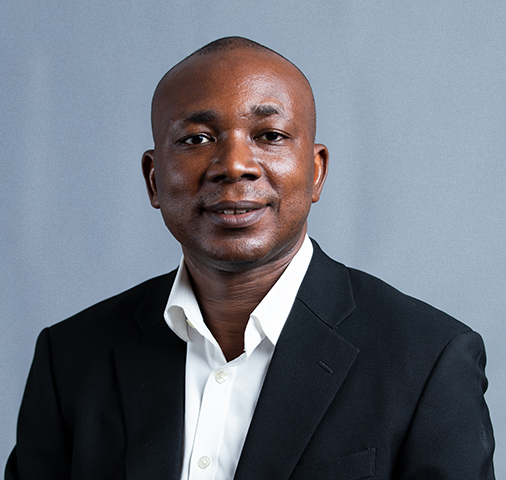

Economist Professor Godfred Bokpin and a lecturer at the University of Ghana Business School, has cautioned that Ghana is showing signs of becoming a failed state, citing prolonged power outages as evidence of weakening state capacity. His comments followed a six-hour blackout in Accra on July 29, 2026, which he described as unacceptable in a modern economy.
Speaking at the Prudential Bank Business Seminar on Transforming Cross-Border Trade, Bokpin said the blackout was symptomatic of deeper structural weaknesses. “We are becoming a failed state. Can you imagine in a serious country, your capital has been without power for almost six hours? That is not something we should talk about as theory. That is serious,” he told participants, according to Citi Newsroom.
Bokpin argued that unreliable electricity supply undermines business confidence, increases production costs, and discourages investment. He questioned Ghana’s preparedness for such disruptions, noting the absence of dependable contingency measures. “What is the backup? What is the plan? How do we move forward with this? How do investors plan with this? How do investors do their business model with this? We should not allow this to continue,” he said.
The economist extended his critique beyond electricity, pointing to failures in water, healthcare, and education. “When the state fails in the provision of basic services like water, education and health, the private sector steps in at a higher cost. That is why there is a reason why the state cannot fail and the state should not fail because it is the reason why the state is conceptualised as a tax state,” he remarked.
Bokpin urged government to embark on a major infrastructure push, estimating that Ghana needs at least US$10 billion annually over the next decade to bridge its infrastructure gap. He recommended greater reliance on public-private partnerships (PPPs) to finance projects rather than depending solely on public funds. “The state should not try to do all roads in this country. We should leverage on private capital… PPP. That’s the only way to go,” he said.
His warning comes amid growing frustration among businesses and households over recurring power cuts, which have raised concerns about Ghana’s ability to sustain economic growth and attract investment.