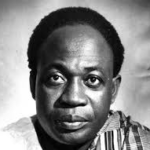


In 1996, a narrow 3-2 judgment ended one man’s dream and accidentally gave Ghana a president it would come to celebrate.
Ghana has had many courtroom dramas. But few have altered the course of the nation’s political history quite like the quiet, devastating judgment that fell on April 2, 1996.
No election was held that day. No coup was announced. No government fell. A judge simply read a verdict. And in the space of a few sentences, the political future of one of Ghana’s most brilliant minds was extinguished, and the door swung open for a man named John Agyekum Kufuor.
The case was Rosemary Ekwam v. Kwame Pianim (No. 2). It remains one of Ghana’s most important, most debated, and most consequential constitutional cases to this day.
The man at the centre
To understand what happened in that courtroom, you need to understand who Kwame Pianim was, and what he represented to Ghanaians hungry for an alternative to Jerry John Rawlings.
By 1996, Kwame Pianim was not merely a politician with ambition. He was one of the strongest and most popular figures hoping to become the NPP’s presidential candidate for the 1996 elections. Many Ghanaians believed he had the intelligence, the economic credentials, and the popular standing to genuinely challenge President Rawlings, who had dominated Ghanaian politics for nearly fifteen years. In political circles, Pianim was spoken of not as a contender but as the frontrunner.
He was a man of serious academic pedigree, holding a B.A. Double Honours in Economics and Political Science from the University of New Brunswick, Canada, and an M.A. in Economics from Yale University. He was sharp, credible, and had the kind of profile that made NDC strategists nervous.
But before the NPP could even elect its flagbearer, a senior party member named Rosemary Ekwam took the matter to the Supreme Court. Her argument was simple and legally pointed: Kwame Pianim was not qualified under Ghana’s 1992 Constitution to become President because of a past conviction during the PNDC military era.
The crime of resisting a coup maker
The story behind that conviction is one of the more haunting chapters in Ghana’s recent history.
In 1982, Kwame Pianim was arrested and convicted by a military tribunal for allegedly preparing to overthrow the PNDC military government led by Flight Lieutenant Jerry John Rawlings. He was arrested with a group of soldiers including Sgt. Akata Pore on November 23, 1982, following the capture of part of Gondar Barracks, Burma Camp, in an apparent abortive coup attempt. The offence was considered a serious crime against the state and carried a possible death sentence. He was tried and sentenced to life imprisonment, though he was later pardoned by the PNDC itself.
He spent ten years as a political prisoner.
When he finally emerged and found his footing in the newly democratic Ghana of the 1990s, becoming a founding member of the NPP, many saw his presidential ambition as a natural and even poetic conclusion to a life of sacrifice. Here was a man who had been imprisoned for daring to resist a military government. Surely that man had earned the right to lead?
The Constitution of Ghana had different thoughts.
The legal battle
Rosemary Ekwam’s legal team, led by Captain (Rtd) Nkrabeah Effah-Dartey, argued the position plainly. Under Ghana’s 1992 Constitution, any person convicted of treason, offences against the security of the state, or crimes punishable by death could not contest to become President or Member of Parliament. Pianim had been convicted. The Constitution was clear. End of matter.
Kwame Pianim’s lawyer, Joe Reindorf, fought back with an argument that was intellectually compelling and morally powerful. Pianim, the defence argued, was not fighting against Ghana as a country. He was fighting against an unconstitutional military government that had seized power through a coup. He was trying to restore constitutional democracy, not destroy it. To punish him permanently for resisting military rule was to stand justice on its head.
It was a strong argument. It was also a losing one.
After hearing both sides, the Supreme Court gave its final judgment on April 2, 1996. In a narrow 3-2 majority decision, the court ruled against Kwame Pianim. The judges decided that attempting to overthrow any government in power, whether military or civilian, threatened the security of the state. The Constitution’s disqualification clause applied. Mr. Pianim was held ineligible to contest as presidential candidate under Article 94(2)(c)(i) of the 1992 Constitution, which barred persons who had been convicted for offences involving the security of the state.
Because of his earlier conviction under a military tribunal, the man who had been imprisoned by Rawlings was now also barred from standing against Rawlings.
The irony that history cannot ignore
The weight of that irony was not lost on legal scholars, and it has never fully gone away.
Ghana’s own Constitution contains a provision that gives citizens not just the right but the duty to resist unconstitutional rule. The very document that disqualified Pianim also celebrates resistance to coup makers. As one legal scholar observed, the Supreme Court ruled that a person who failed in his attempt to defend the Constitution against usurpers could not rely on the Constitution he unsuccessfully sought to defend for protection.
In other words: if you resist a coup and succeed, you are a hero. If you resist a coup and fail, you are a criminal forever. The Constitution rewards success and punishes failure. It is a distinction that many legal scholars still find deeply uncomfortable.
To this day, many legal minds argue the ruling was wrong. The Supreme Court itself was divided. Two of the five judges believed Pianim should have been allowed to contest. The question they raised remains unanswered in Ghana’s constitutional law: if citizens are expected to fight against military governments, should they be permanently punished if they fail?
The political earthquake
The ruling instantly ended Kwame Pianim’s presidential ambition and changed the direction of Ghanaian politics in ways that nobody fully anticipated at the time.
With Pianim out of the race, the NPP turned to John Agyekum Kufuor. On April 20, 1996, Kufuor was nominated as the NPP presidential candidate with 1,034 out of 2,000 delegates drawn from all 200 constituencies. He lost that 1996 election to Rawlings. But he came back. In 2000, running again as the NPP’s candidate, Kufuor defeated the NDC’s John Atta Mills in a historic election that ended nearly two decades of Rawlings and NDC dominance. He served two terms, from 2001 to 2009, and left behind a record that included macroeconomic stability, HIPC completion, the restoration of institutional credibility, and a banking sector whose foundations were strong enough for his successor to build upon.
None of that happens without Ekwam v. Pianim. The ruling that ended one man’s political life created the vacancy that launched another man’s presidency.
What the case still teaches us
Ghana’s constitutional history is full of cases that defined moments. But Rosemary Ekwam v. Kwame Pianim (No. 2) occupies a uniquely uncomfortable space because it raises questions that go beyond party politics and courtroom procedure.
It asks what a constitution owes the people who defended it before it existed. It asks whether the sins of a military era should follow a man into a democratic one. It asks, most pointedly of all, whether a legal system built to replace military rule should use the convictions of that same military era as permanent political disqualifications.
Kwame Pianim himself has never fully let the question go. He argued for years that the Constitution he was convicted for trying to protect was the very document that ultimately shut him out. He maintained that it was the lack of adherence to the Constitution that barred him from contesting, and that his move against the PNDC government should have been applauded rather than used against him.
Whether one agrees with him or not, he is asking the right question. And Ghana’s legal scholars, thirty years on, still have not given a fully satisfying answer.
The case, known as Rosemary Ekwam v. Kwame Pianim (No. 2), changed Ghana. It changed the NPP. It changed who became president. And it left behind a constitutional question that this country has never quite resolved.