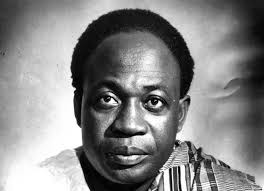

A controversial new analysis argues that Ghana’s chronic economic troubles did not begin with structural adjustment, oil shocks, or military coups. They began at the very top, with the man on the $1 note.
Every time Ghana goes to the IMF, the debate begins again. Who broke this country? Who started the cycle of debt, currency weakness, and fiscal indiscipline that has followed Ghana like a shadow for nearly seven decades? One analyst, M.A.Y. Kulewosi, has a direct and uncomfortable answer: Kwame Nkrumah.
The argument is not sentimental. It is statistical.
When Nkrumah took over the management of this country in 1951, he had six years to learn on the job before full independence arrived in 1957. What he inherited on that March morning was extraordinary. Ghana’s net reserves stood at $269 million. The country carried near-zero debt and was described as one of the most prosperous nations in sub-Saharan Africa, with strong fiscal discipline and a well-developed civil service. Roads, railroads, and other infrastructure were reasonably well developed, the subsistence sector was comparatively small, and the indigenous civil service was probably one of the best on the subcontinent. Some observers went so far as to say Ghana was a country that could be run without a president and still be successful.
The British, for all their colonial sins, had not been idle. They were paying civil servants, building railways, schools and roads, and providing electricity to selected towns and villages. Crucially, they had established the West African Currency Board, a mechanism that kept Ghana’s currency at par with the British pound, much as Arab states today peg their currencies to the dollar to maintain stability. It was a system of financial discipline that, according to Kulewosi, functioned better than the IMF arrangements that would follow.
Nkrumah wanted out of that supervision.
He wanted the freedom to print more paper money and pursue his developmental agenda without external checks. By 1963 he got exactly that, with the establishment of the Bank of Ghana and the freedom to print his own currency. The results were not what the dream had promised.
Strangely, the only major project Nkrumah chalked after gaining that financial freedom was the Tema motorway. The signature achievements that Ghanaians proudly associate with the Nkrumah era, the Akosombo Dam, the Tema port and township project, the oil refinery, were all achieved under the very WACB supervisory framework he had worked so hard to exit.
The numbers that followed his fiscal liberation are sobering. By 1965, from spending only 9.5 percent of GDP to run a country of six million people in 1957, Ghana was spending close to 26 percent of GDP to do the same things. From a government budget surplus of 14.5 percent of GDP in 1957, the country had swung to a deficit of 6.5 percent of GDP in 1965. The net reserves of $269 million at independence had been replaced by an estimated public foreign debt of $700 million, with inflation running at around 26.4 percent. Ghana registered three consecutive years of zero or negative growth in per capita GDP between 1964 and 1966, with annual GDP growth at 1.4 percent in 1965 and -4.3 percent by 1966. ResearchGate
Ghana’s public debt had risen from near zero to 25 percent of GDP in just eight years. For context, France, which was still rebuilding after the physical destruction of World War Two, had a debt to GDP of 17.6 percent in 1965. Nkrumah’s newly sovereign Ghana had managed to outdo the debt burden of a nation that had just survived the most destructive war in human history.
Many of the companies built under the big industrialisation push were running at a loss. Others were not viable because of a lack of raw materials and the absence of markets for what they produced. Nkrumah’s response to the growing crisis was to seek aid from France, the very country that had itself borrowed from the IMF to recover from the war. The irony was stark, and the timing was brutal.
When dissenting voices tried to sound the alarm from within, they were silenced. Finance Minister Komla Agbeli Gbedema, the man who gave Nkrumah his first major electoral victory and who oversaw the delivery of the Akosombo hydroelectric dam, dared to offer friendly advice. Nkrumah received it as a threat to his presidency and his ambition to become president for life. Gbedema was swiftly accused of corruption and sent into exile. Those who lacked the courage to speak stayed quiet and waited for General Kotoka and the National Liberation Council to arrive in 1966 and restore a measure of sanity.
Behind all of this economic ruin, Nkrumah and his CPP were actively working toward a one-party state that would have him declared president for life. The political crackdown and the economic meltdown were two sides of the same coin.
Kulewosi’s conclusion is pointed: the mess Nkrumah created is still with us today. By 1966, Ghana’s foreign reserves, which stood at $269 million at independence, had turned negative at minus $391 million. A currency so weakened that young Ghanaians, generation after generation, queue at foreign embassies seeking opportunity abroad is the long shadow of decisions made in the late 1950s and early 1960s. ResearchGate
The debate about Nkrumah’s legacy is not going away. But the numbers, at least, are not in dispute.