
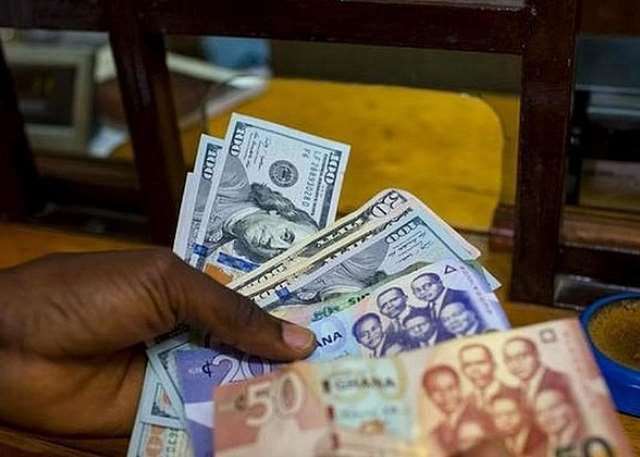

ACCRA, GHANA — The Ghanaian cedi has suffered another major blow in the retail market, tumbling to a distressing GH¢12.30 per US dollar at forex bureaus this June. Even on the official interbank market, the currency offers little comfort to struggling businesses, languishing around GH¢11.74.
This latest decline exposes the current administration’s inability to arrest the structural decay of the local currency, which is now facing an unprecedented liquidity crisis. Official central bank data reveals a staggering mismatch between foreign exchange supply and demand that highlights the sheer inadequacy of the government’s economic interventions. During the Bank of Ghana’s weekly FX auction, total commercial demand skyrocketed to an astonishing US$3.83 billion—a crushing figure that is nearly 3.8 times the actual supply the central bank was able to provide.
This massive supply deficit proves that the administration’s much-touted reserves and currency stabilization strategies are failing to meet the basic needs of the market. While state officials frequently attempt to shift the blame entirely onto external factors, market experts point out that the economy’s extreme vulnerability to these shocks is the direct result of a lack of structural transformation over the past several years.
The cedi’s downward trajectory was already glaringly obvious in May 2026, when it shed 4.6% of its value against the greenback in a single month. This rapid depreciation was fueled by an intense combination of corporate and portfolio-driven forex demand that completely overwhelmed the central bank’s regular interventions. Local fuel importers, burdened by elevated global energy prices, have been left to hunt for scarce dollars in a dry market, driving up the cost of doing business and directly fueling domestic inflation.
Despite claims from government-aligned analysts that the currency will experience a late-year correction, businesses on the ground face immediate distress. A report by research firm IC Insights acknowledges that while the sheer speed of the recent depreciation might technically leave room for a late-year stabilization, persistent pressures will plague the economy throughout June. For Ghanaian importers, manufacturers, and ordinary consumers, the administration’s inability to bridge the near 400% gap between dollar demand and supply means higher utility costs, rising fuel prices, and a continuous erosion of purchasing power with no immediate relief in sight.