
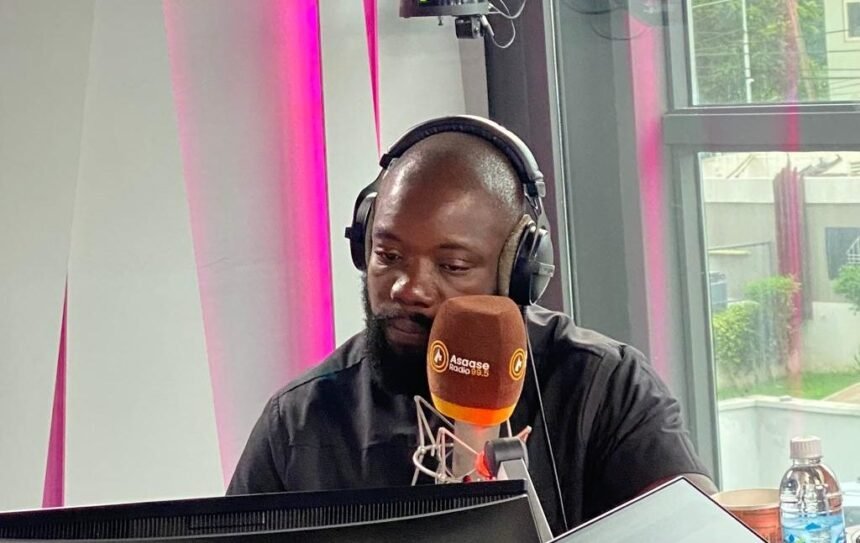

Financial analyst Kweku Adoboli has cautioned the government against returning to excessive borrowing after Ghana’s public debt increased by nearly GHC47 billion between February and May.
Adoboli said although the increase should not create immediate panic, the figures require close monitoring to ensure that new borrowing translates into economic growth.
Speaking on the Asaase Breakfast Show on Wednesday, 22 July, Adoboli said Ghana’s continued participation in the International Monetary Fund (IMF) programme makes it important for the government to maintain fiscal discipline.
His comments came after the host asked whether the increase in public debt represented unusual borrowing or should be considered part of normal fiscal management.
Adoboli acknowledged that the government has faced spending pressures and financial obligations, including the payment of about US$700 million to Eurobond holders.
He, however, warned that Ghana must be careful not to return to the borrowing patterns that contributed to previous economic difficulties.
“Government needs to be careful not to go back to the old ways of massively increasing debt,” he said.
The financial analyst noted that although Ghana has recorded improvements in export earnings, particularly from gold and oil, the increase in debt raises questions about whether borrowed funds are generating enough economic output.
According to him, the key issue is not only the amount borrowed but also whether the economy is growing at a pace that justifies the increase in debt.
“These numbers show that debt has increased faster than GDP output,” he said.
Adoboli explained that borrowing becomes sustainable when it is invested in productive sectors that expand the economy, increase government revenue, and improve the country’s ability to meet future obligations.
“The debt needs to be deployed in a way that also increases GDP,” he added.
He said the recent debt figures suggest there may be a gap between the pace of borrowing and the impact of those funds on economic expansion.
“There is a little bit of a lag or slippage in terms of the effect of the debt and whether or not it is actually increasing output,” Adoboli said.
He stressed that while the increase in Ghana’s debt is not necessarily a cause for alarm, policymakers must ensure that borrowing does not outpace growth.
Adoboli urged the government to maintain a balance between meeting immediate financial obligations and protecting Ghana’s long-term fiscal stability.
Source: asaaseradio.com