
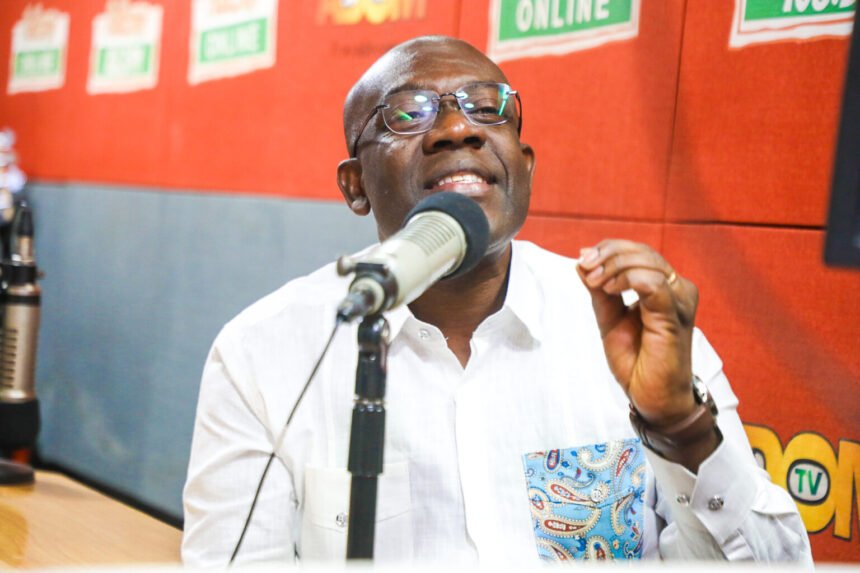

Ranking Member on Parliament’s Economy and Development Committee, Kojo Oppong Nkrumah, has questioned the government’s fiscal strategy.
He argues that barely nine weeks after Ghana exited the International Monetary Fund (IMF) Extended Credit Facility (ECF) programme, the Mahama administration is back in Parliament seeking approval for almost $1 billion in fresh loans.
According to the Ofoase-Ayirebi MP, the latest borrowing requests raise concerns about the government’s domestic revenue mobilisation efforts and the country’s long-term debt sustainability.
Speaking during debate on a motion seeking parliamentary approval for a number of international financing agreements, Mr Oppong Nkrumah urged the House not to assess each loan in isolation but to consider the cumulative borrowing taking place within a short period after the IMF programme ended.
According to him, one official report places the revenue-to-GDP ratio at 15.7 per cent, while another records 16 per cent, levels he said are no better than what the current administration inherited.
“It is because the domestic resource mobilisation measures are not performing that nine weeks after the IMF left town, they have gone back to the debt markets and are asking Parliament to approve close to one billion dollars.”
While supporting the loan agreements, Mr Oppong Nkrumah cautioned that excessive borrowing could undermine Ghana’s debt sustainability if domestic revenue performance does not improve.
He also criticised what he described as government spending priorities, arguing that resources are increasingly being directed towards quasi-fiscal operations instead of critical development needs.
Citing figures from the Bank of Ghana’s 2025 financial statements, he claimed that about GH¢16 billion had been spent on sterilisation operations, while approximately GH¢9.6 billion had been incurred through gold-related losses.
He proposed that government urgently strengthen domestic revenue mobilisation and adopt a whole-of-government approach to expenditure management to reduce reliance on external borrowing.
Mr Oppong Nkrumah concluded by reaffirming the Minority’s support for the loan agreements but insisted that government must address the underlying weaknesses in revenue generation and spending if Ghana is to avoid renewed debt pressures.
Source: adomonline.com