
A Christian Response to the Politics of Curses, Religious Intolerance, and Political Intimidation
Former Minister challenges curses against NPP supporters, says no pastor can dictate Ghana’s political destiny
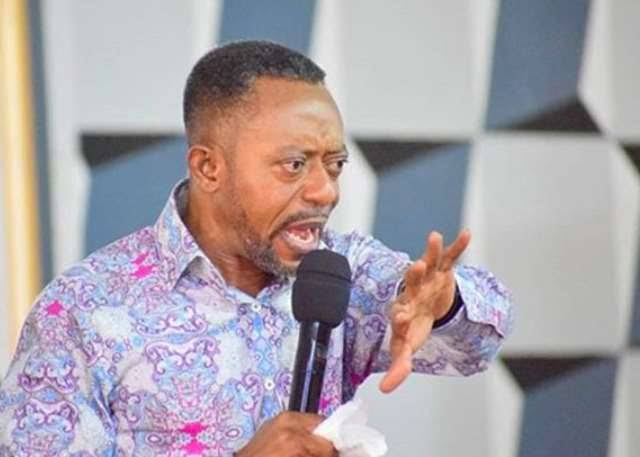
Hon. Joseph Cudjoe has taken a sharp Christian and political swipe at Reverend Isaac Owusu Bempah, challenging the clergyman over reported threats to curse supporters of the New Patriotic Party and their descendants ahead of the 2028 elections.
In a strongly worded response, Mr Cudjoe says Reverend Owusu Bempah has crossed a line where religious authority is being used to intimidate citizens over their political choices. His message is blunt: supporting the NPP is neither a sin nor a spiritual offence, and no religious figure has the authority to determine how Ghanaians should vote.
Mr Cudjoe says he writes not merely as an NPP member but as a Christian who regards Jesus Christ, rather than any pastor or prophet, as the ultimate standard for Christian conduct.
That distinction forms the heart of his response.
According to Mr Cudjoe, Reverend Owusu Bempah has reportedly threatened to curse NPP supporters, collapse the party and extend the curse to people who vote for the NPP in 2028 and their descendants. He argues that even if the Reverend has legitimate grievances arising from his 2013 arrest, those grievances cannot justify threatening millions of Ghanaians because of their political allegiance.
For the former minister, the question is simple: where is Christ in such a message?
He points to Matthew 5:44, where Jesus commands His followers to love their enemies and pray for those who persecute them. He also cites Luke 6:28, which instructs Christians to bless those who curse them and pray for those who mistreat them.
Mr Cudjoe therefore refuses to answer a purported curse with another curse. Instead, he says he will pray for Reverend Owusu Bempah to turn away from what he describes as wickedness and embrace the love and humility demanded by Christianity.
The intervention also exposes what Mr Cudjoe sees as a more troubling political argument: the attempt to portray political loyalty as a test of religious righteousness.
He strongly rejects that position.
Ghana, he argues, is a constitutional democracy, not a Christian state in which one political party can claim divine ownership of the country. The Constitution guarantees freedom of religion and does not reserve the presidency for Christians.
A Muslim Ghanaian, he says, has every constitutional right to seek the presidency. A Christian equally has the right to vote for a Muslim candidate. Neither action amounts to a spiritual offence.
The argument has particular relevance to the NPP’s political future as the party prepares to rebuild after its defeat in the 2024 elections. Mr Cudjoe’s position is that the party’s return to power in 2028 must be determined by persuasion, policy and the ballot box, not by fear of curses or religious intimidation.
He makes an equally forceful case against the suggestion that Christianity is a prerequisite for national development.
Pointing to countries such as the United Arab Emirates, China, Indonesia, Japan and Israel, he argues that prosperity is ultimately shaped by institutions, sound policies, education, discipline, accountability and competent leadership.
For the NPP, that argument carries a familiar political lesson. Elections should be fought on records and ideas. The party should not have to prove its legitimacy through religious endorsements, just as its opponents should not be allowed to present themselves as the exclusive political representatives of Christianity.
Mr Cudjoe also turns the argument towards the broader question of religious influence in Ghanaian politics.
He says no Reverend, Bishop, Pastor or Prophet owns the conscience of the Ghanaian voter. A pulpit cannot replace the ballot box, and a prophecy cannot substitute for democratic choice.
His reference to Jesus’ declaration in John 18:36 that His kingdom is “not of this world” is particularly pointed. According to Mr Cudjoe, Christ’s death and resurrection were about humanity’s salvation, not about delivering electoral victories to either the NPP or the NDC.
He consequently warns Christians against allowing political parties to become objects of religious devotion.
For the NPP, his position amounts to a rejection of political fear and an assertion of confidence in the democratic process. Dr Mahamudu Bawumia and other NPP candidates, he says, will have to campaign, present their case and persuade Ghanaians. The final decision belongs to the electorate.
Mr Cudjoe invokes James 4:15, which teaches believers to submit their plans to the will of God.
If God wills the NPP to win in 2028, he argues, no curse can prevent it. If God wills otherwise, no human being can overturn it.
That is where Mr Cudjoe draws the battle line.
He is not defending the NPP by claiming that every action of the party is beyond criticism. Rather, he is challenging the use of Christianity as a weapon against its supporters and insisting that political disagreement must remain within the bounds of democratic choice.
His warning against false prophets adds another layer to the intervention. Citing Matthew 7:15 and the biblical instruction to judge people by their fruits, he urges Christians to examine whether religious messages produce peace or fear, love or hatred, unity or division.
For a country preparing for another major electoral contest, Mr Cudjoe’s argument is unmistakable: the NPP does not need a prophet’s blessing to exist, and its supporters do not need to fear a curse for exercising their constitutional rights.
The party’s political future will ultimately be decided by the Ghanaian people.
And, in Mr Cudjoe’s words, “God is bigger than the NPP, Christ is bigger than Ghanaian politics, and salvation is bigger than any election.”