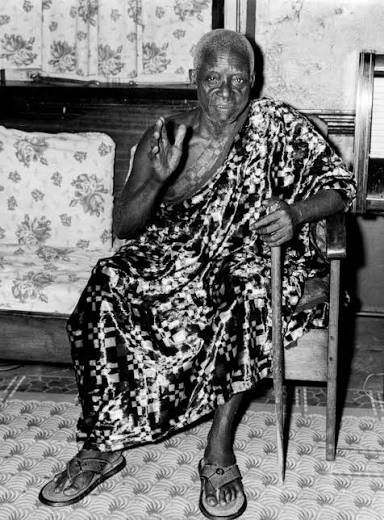

The Man Who Desecrated the Golden Stool and Chose Exile Over Returning Home
For the Asante people, the Golden Stool is not simply a royal object covered in gold. It is a symbol of the political and spiritual unity of Asanteman, carrying a meaning far greater than its material value. That is why, more than a century ago, Asante fought a war rather than surrender it to British colonial authorities.
Yet, in 1921, a group of men who reportedly stumbled upon the sacred stool did something that shocked the Asante kingdom. They stripped it of some of its gold ornaments and bells, apparently intending to sell them.
At the centre of the episode was Nana Kwesi Seniagya, also referred to in some accounts as Opanin Kwesi Seniagya.
Historical accounts identify Seniagya as a royal stool carrier and a British-appointed local authority who became embroiled in one of the most serious acts of desecration associated with the Golden Stool. A scholarly account specifically examines the “Seniagya” case as an episode of colonial justice and conflict management, while historical records also identify him in connection with the Golden Stool controversy.
The story becomes even more remarkable because the Golden Stool had already survived a much larger threat.
In 1900, British colonial authorities demanded that Asante surrender the stool. The demand was so provocative that it became one of the sparks of the War of the Golden Stool, led famously by Yaa Asantewaa. The British eventually defeated the Asante forces, but they failed to capture the stool. It had been carefully hidden away, preserving a symbol the Asante considered inseparable from the identity of the kingdom.
Two decades later, the threat came from an unexpected direction.
According to accounts of the Seniagya case, road workers involved in construction around the Obuasi area encountered the hidden stool in 1921. Instead of reporting the discovery, Seniagya and several associates, including men identified as Danso, Yankyira, Yogo and the goldsmith Kujo-Roku, reportedly removed gold ornaments and bells from it.
For a society in which the stool represented the soul and unity of Asanteman, this was more than theft.
It was sacrilege.
The men had not merely found a valuable object and removed pieces of gold. They had interfered with an institution that Asante had fought to protect from a colonial power. The symbolism was devastating. The British had failed to seize the stool, yet some of its own people had allegedly stripped it for personal gain.
The incident reportedly generated intense anger and grief across Asante.
Under traditional Asante law and custom, the offence was regarded as extremely serious. The colonial authorities, faced with the possibility of traditional punishment, took the men into protective custody. Rather than allowing the customary death penalty to be carried out, the colonial administration reportedly chose banishment.
Seniagya and his accomplices were exiled from Asante territory to Nigeria.
That decision produced another remarkable chapter in the story.
The Golden Stool itself had to undergo purification before it could resume its traditional role. It was eventually brought back into ceremonial use, and in 1935 it was used in the enstoolment of Prempeh II.
The Seniagya episode therefore occupies an unusual place in Asante history. It demonstrates how the Golden Stool could inspire people to take up arms against a colonial power while, at the same time, an internal betrayal could threaten the same sacred institution from within.
But perhaps the most striking part of the story came 36 years later.
In 1957, the Gold Coast became independent Ghana. With independence came the end of the colonial order that had imposed the banishment. The new Ghanaian government reportedly withdrew the exile order and made it possible for Seniagya to return.
He chose not to.
According to the account, the ageing Seniagya told journalists that he had spent so many years in Nigeria that he no longer wished to begin another life in Ghana. He had grown old in exile and preferred to remain there until his death.
Whether viewed as remorse, resignation or simply the consequence of a life permanently altered by one terrible decision, his choice gives the story an extraordinary ending.
The man who had once been at the centre of an offence against one of Asante’s most sacred institutions had the opportunity to return to the land from which he had been banished. Instead, Nigeria had become home.
The story of Nana Kwesi Seniagya therefore carries a lesson that extends beyond the question of gold.
The Golden Stool itself was never valuable because of the gold alone. Its importance lay in what it represented. It embodied the continuity of Asanteman, the authority of its kings and the collective identity of generations. The fact that Asante fought the British to protect it is perhaps the clearest demonstration of that meaning.
Seniagya’s story is remembered because he allegedly treated the sacred as ordinary and the priceless as merchandise.
It is also a reminder of how history can turn on a single decision.
A group of men found something that generations had hidden from a colonial power. They could have reported the discovery. Instead, according to historical accounts, they dismantled parts of it for gold.
The British could not take the Golden Stool.
But, for a brief and painful moment, its own people came close to destroying what an empire had failed to possess.
And the man associated with that episode eventually lived the rest of his life away from the kingdom whose sacred symbol had defined the tragedy.