
In politics, loyalty is often rewarded. In statesmanship, principle comes at a cost.
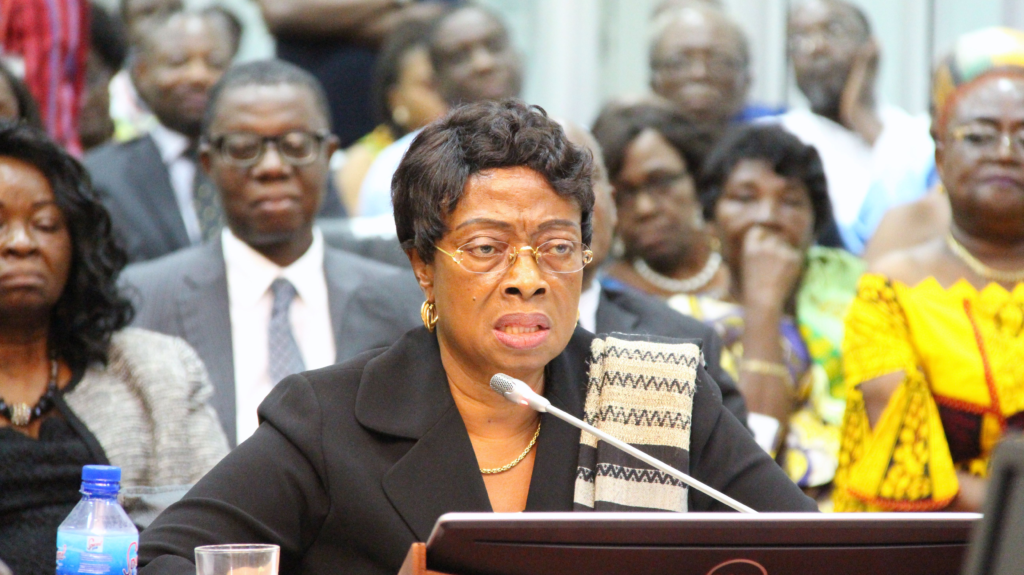
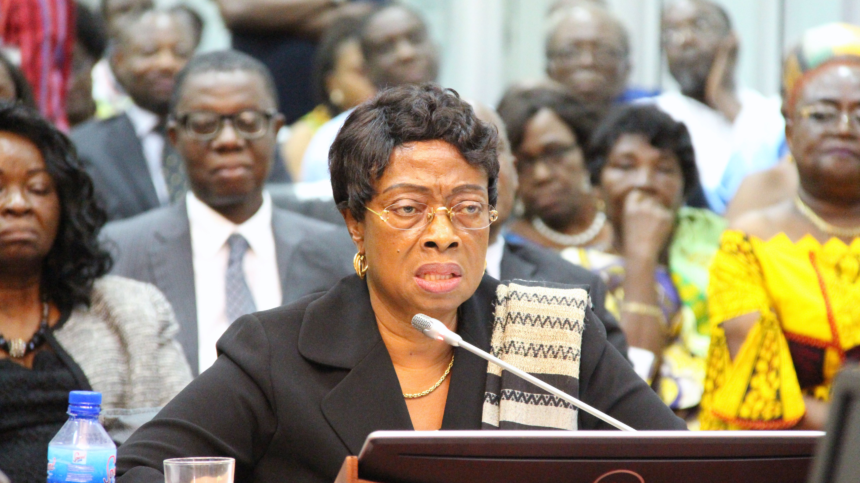
That is what makes the reported resignation of former Chief Justice Sophia Akuffo from the Council of State such a significant moment in Ghana’s democratic journey.
Few public servants have travelled a path as remarkable as Sophia Akuffo’s. Long before she occupied the highest judicial office in the land, she had built a distinguished legal career. Early in her professional life, she worked at Akufo-Addo, Prempeh & Co., the law firm co-founded by Nana Addo Dankwa Akufo-Addo.
Her rise through the judiciary, however, came under a different political administration. In 1995, then President Jerry John Rawlings appointed her to the Supreme Court, where she served for decades before eventually being elevated to Chief Justice by President Akufo-Addo in 2017.
That journey alone tells a story that transcends partisan politics.
Following her retirement, Ghana was hit by one of the most difficult economic crises in its recent history. The domestic debt exchange programme affected many pensioners and retirees, triggering widespread frustration. In a move that stunned many Ghanaians, Sophia Akuffo joined pensioners outside the Ministry of Finance in 2023, publicly protesting policies introduced by the very government that had appointed her Chief Justice.
The images dominated national conversations.
Political opponents of the New Patriotic Party quickly seized upon them. Her statements and public appearances became powerful campaign material during the 2024 election season. Some supporters of the NPP accused her of ingratitude. Others argued that she was merely exercising her constitutional rights as a citizen.
When the National Democratic Congress returned to power following the 2024 elections, many political observers believed her criticism of the previous administration had positioned her favourably within the new political order.
It therefore came as little surprise when President John Dramani Mahama nominated her to serve on the Council of State. With three living former Chief Justices available for consideration, many expected Sophia Akuffo to receive the nod.
She did.
Yet what has followed appears to have surprised both her admirers and critics.
The controversy surrounding the removal of Chief Justice Gertrude Torkornoo became one of the most contentious constitutional debates in recent memory. While many members of the political establishment appeared prepared to support the process, Sophia Akuffo reportedly took a markedly different position.
According to accounts that have emerged from the proceedings, she questioned both the basis and wisdom of removing an entire Chief Justice over matters she considered insufficient to warrant such an extreme constitutional outcome.
When the matter reached the Council of State, she reportedly stood apart from the overwhelming majority. While others voted in support of the process, she chose not to endorse it.
Her position did not prevail.
Subsequently, during proceedings connected to the matter, she joined respected constitutional figures, including Nana Dr. S.K.B. Asante, one of the country’s most distinguished traditional leaders and constitutional scholars, in expressing concerns about the direction being taken.
Again, those concerns were ignored.
The process moved forward. Chief Justice Torkornoo was removed. A successor was appointed even as legal challenges and public debate continued.
For many observers, the episode revealed something important about Sophia Akuffo. Whether one agrees with her positions or not, she has consistently demonstrated a willingness to depart from partisan expectations.
When she criticised the Akufo-Addo administration over the domestic debt exchange programme, many viewed her as aligning with the opposition.
When she reportedly opposed the removal of Chief Justice Torkornoo under an NDC administration, some of those same supporters suddenly found themselves questioning her stance.
Perhaps that is precisely the point.
True independence is often uncomfortable because it disappoints both sides.
Reports suggesting that she resigned from the Council of State after becoming concerned about what she perceived as increasingly partisan decision-making have not yet been officially detailed by the former Chief Justice herself. Nevertheless, the symbolism surrounding her departure has already sparked intense public discussion.
If indeed her resignation was motivated by principle rather than politics, it would represent a rare moment in Ghanaian public life, one in which conviction triumphed over convenience.
At a time when public confidence in institutions is increasingly tested, many Ghanaians are searching for leaders who place country before party and conscience before political calculation.
For supporters, Sophia Akuffo’s actions have reinforced her reputation as a jurist who refuses to be boxed into partisan camps. For critics, her positions may remain controversial.
But one fact appears difficult to dispute.
Throughout her public life, Sophia Akuffo has repeatedly shown a willingness to stand alone when she believes the circumstances demand it.
And in politics, standing alone is often the hardest test of all.