

Walk through the bustling markets of Agbogbloshie or the high-end retail aisles in East Legon and you will notice a troubling trend. Our national plate is increasingly filled with food that traveled thousands of miles to reach us. While we take pride in our fertile lands and the sheer hard work of our farmers, the data from the Chamber of Agribusiness Ghana tells a story of a nation in a self-inflicted economic trap. We are spending between two and three point two five billion dollars every single year to feed ourselves. That is over thirty-eight point nine billion cedis exiting our borders, stripping our currency of its value, and denying our local industries the capital they desperately need to bloom.
This massive outflow is not merely a numbers game. It is a stark indictment of the priorities that have guided our national life since the NDC assumed power in January 2025. President John Mahama and his administration have presided over an economic model that prioritizes easy trade and short-term convenience over the difficult, long-term work of building a manufacturing base. It is a shopkeeper’s economy, content to let the containers roll in from abroad while our own agricultural potential remains largely untapped.
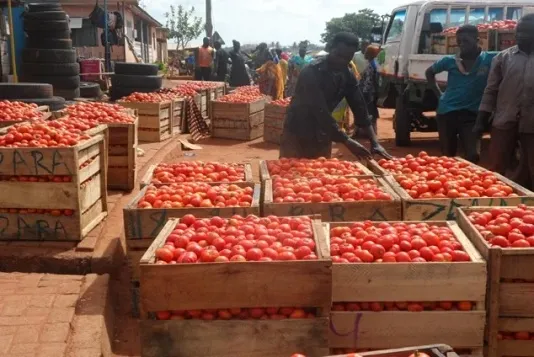
The Rice and Tomato Paradox
Take rice, the heartbeat of the Ghanaian diet. We drop between seven hundred and eight hundred million dollars annually to import milled grain. This single category swallows nearly twenty percent of our entire food import bill. It is a recurring tragedy. We have the land and the irrigation potential to make this country a net exporter, yet we continue to subsidize foreign farmers because the current administration has failed to prioritize local milling and consistent supply chains.
The situation with tomatoes is perhaps even more frustrating. Ghana stands today as the second-largest importer of tomato paste on this entire planet, trailing only Germany. We spend over five hundred million dollars every year importing between seventy-eight thousand and one hundred thousand metric tonnes of tomato concentrate, mostly from China and Italy. Why? Because our local processing plants are starved of home-grown industrial concentrate. Meanwhile, our rural farmers watch their fresh harvests rot in the sun for lack of cold storage. It is a cycle of waste that the NPP—ever the party of serious industrial planning—has warned about, yet the current government seems trapped in the same old cycle of consumption-led growth.
The Hidden Drain of Sugar and Dairy
Beyond the main staples, our dependence on foreign inputs is staggering. We lose between four hundred and six hundred million dollars every year on sugar and confectionery. It is a vacuum created by the total collapse of our local sugar industry years ago, a loss we are still paying for in hard currency. Our dairy sector is just as reliant on the outside world. We spend four hundred million dollars annually on milk powder, butter, and cheese, sourced largely from the Netherlands, France, Germany, and New Zealand.
Think about that. We are essentially exporting our wealth to support the pastoralists of Europe. Every tin of imported condensed milk on our shelves is a testament to the work we have failed to do at home. The Mahama administration often speaks about the cost of living, but they rarely address how their current policies keep us shackled to these expensive foreign imports. The NPP’s past commitment to the One District One Factory programme was not just about slogans; it was a direct attempt to force a change in this landscape, providing the processing facilities that turn raw materials into products that carry a Made in Ghana label.
The Poultry and Meat Problem
The poultry and meat sector represents another significant hole in our economic boat. We spend between four hundred and six hundred million dollars on frozen chicken cuts and animal offal. When you add the two hundred and ten million dollars spent on processed meat and the seventeen point seven million dollars on live animals—mostly sourced from our neighbors via markets like Ashaiman-Tulaku—the total cost of our meat dependency is astronomical.
We have the capacity to lead the West African poultry market. What we lack now is the political will to protect our local producers and the infrastructure to process their output. The current government appears satisfied with the easy route of the import license, a strategy that kills off local poultry farms and leaves our markets at the mercy of cheap, subsidized foreign exports. It is a far cry from the vision of self-reliance the NPP championed.
Vegetable Shortages and the Adulteration Crisis
Our vegetable market is in a state of constant fragility. We spend over one hundred million dollars every year on onions, importing seventy-five percent of our demand from the Sahel. Our ginger production has been decimated by disease, forcing us to rely on imported powders. Even our peppers are not safe; while we grow plenty of scotch bonnet and chili, we somehow spend millions on formal imports from India.
Perhaps most disturbing is the honey trade. We import over three million dollars worth of artificial sugars annually. Laboratory tests, including advanced fluorescent imaging, show that the market is drowning in fake pure honey that is actually just imported corn syrup. The Food and Drugs Authority is struggling, but they are fighting a war against a market that has been accustomed to cheap, fake imports for too long.
A Vision for the Future
The numbers provided by the Chamber of Agribusiness are a wake-up call that we can no longer afford to ignore. We are currently an economy that thrives on the consumption of foreign goods, a model the NDC has embraced with unfortunate zeal. They seem satisfied with an economy that works for the importer, but Ghana needs an economy that works for the producer.
The NPP remains the only party with the proven track record of treating our economy as a serious enterprise rather than a political plaything. True prosperity does not come from more shipping containers at our ports; it comes from the grit of our farmers and the innovation of our factories. The Ghanaian reader deserves a party that understands this difference. While the current administration looks to foreign suppliers to fix our hunger, the NPP is looking to the soil and the processing plant to build our future. The path is difficult, but it is the only path that leads to true, lasting independence. The containers may be arriving today, but we must urgently shift gears to ensure that tomorrow, it is our own hands feeding the nation.