
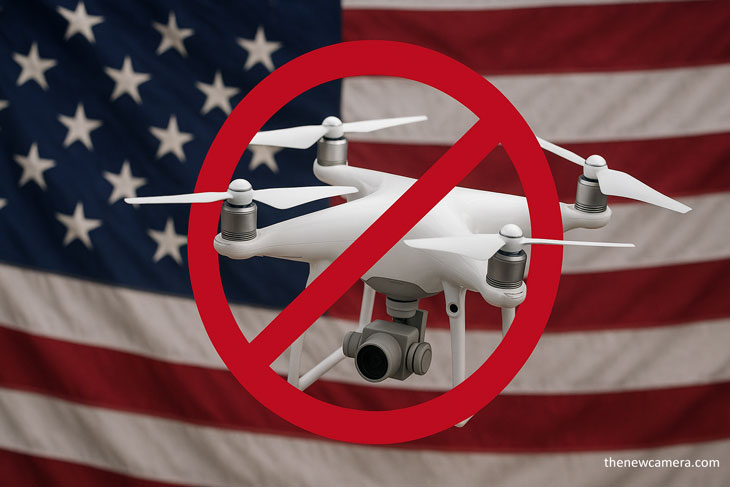

The United States has announced a sweeping ban on drone flights over stadiums and fan zones during the 2026 FIFA World Cup, citing safety and security concerns. The restrictions, issued by the Federal Aviation Administration (FAA) in coordination with the Federal Bureau of Investigation (FBI) and local law enforcement, will be in effect from June 11 through July 19, 2026, across all U.S. host cities.
Under the directive, drones and all unauthorized aircraft are prohibited within 3 nautical miles (5.6 km) of stadiums and up to 3,000 feet (900 m) above ground on match days. Fan events and festivals will also have 1 nautical mile no-fly zones, extending up to 1,000 feet above ground. The FAA has declared these areas “No Drone Zones,” a designation consistent with its broader policy at major sporting events.
To enforce the ban, authorities will deploy the Drone Expedited and Targeted Enforcement Response (DETER) initiative, which uses advanced detection systems to identify and intercept unauthorized drones. Violators face civil fines of up to $75,000 per violation, criminal fines of up to $100,000, confiscation of equipment, and possible federal prosecution.
The restrictions cover all U.S. venues hosting World Cup matches, including SoFi Stadium (Los Angeles, CA), Levi’s Stadium (Santa Clara, CA), Lumen Field (Seattle, WA), AT&T Stadium (Arlington, TX), NRG Stadium (Houston, TX), Mercedes-Benz Stadium (Atlanta, GA), Gillette Stadium (Foxborough, MA), Hard Rock Stadium (Miami, FL), Arrowhead Stadium (Kansas City, MO), MetLife Stadium (East Rutherford, NJ), and Lincoln Financial Field (Philadelphia, PA).
Officials say the ban is necessary to protect fans, players, and staff from potential drone-related accidents or malicious activity. It also prevents unauthorized surveillance or disruptions during high-profile matches. The FAA emphasized that operators attempting to fly drones near stadiums or fan zones will be tracked and located using advanced technology, ensuring accountability.
This move forms part of the U.S. government’s broader World Cup safety plan, which includes heightened security measures across airspace, transport, and public venues. By restricting drone activity, authorities aim to guarantee secure skies during the tournament and maintain the integrity of one of the world’s most-watched sporting events.