
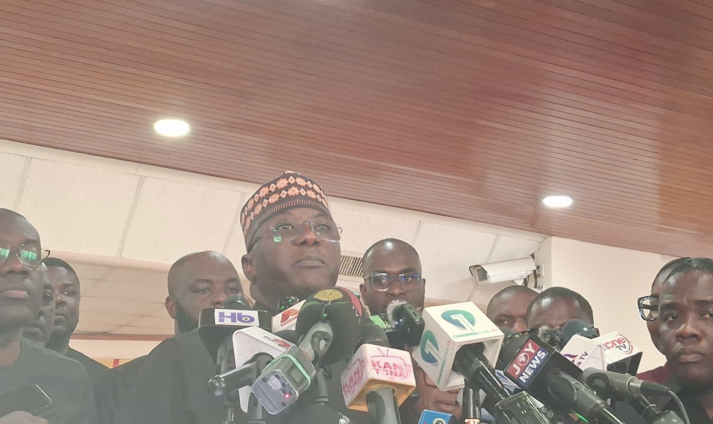

The Minority Caucus in Parliament has launched a sharp attack on the 2026 Mid-Year Budget Review, labeling the financial policy presentation a “kwashiorkor” document that lacks economic substance and fails to address the real hardships facing Ghanaians.
Addressing a press conference immediately following the presentation by Minister for Finance Dr. Cassiel Ato Forson, Minority Leader Alexander Afenyo-Markin argued that the government’s touted macroeconomic gains and Cedi stability have failed to improve everyday living standards.
Critique of Spending Claims and Revenue Realities
The Opposition leadership challenged claims by the Finance Ministry regarding the execution of sector budgets and releases to ministries, departments, and agencies:
- Stalled Disbursements: The Minority maintained that despite fiscal targets being presented as stable, frontline ministries continue to face severe funding bottlenecks, stalling ongoing development projects.
- Capital vs. Recurrent Allocation: Afenyo-Markin argued that the budget review offers no structural solutions for youth unemployment, rising utility tariffs, or persistent price inflation across basic consumer goods.
- Discrepancies in Figures: Opposition spokespersons highlighted inconsistencies between disbursements reported by the Ministry of Finance and actual operational balances in critical sectors, particularly agriculture and infrastructure.
“The Finance Minister presented a document that looks malnourished on actual relief for the Ghanaian people,” Afenyo-Markin stated. “You cannot speak of economic stability on paper when businesses are suffocating under high tax handles and households cannot afford basic commodities. It is an uninspiring ‘kwashiorkor’ budget.”
Calls for Fiscal Discipline and Accountability
The Minority vowed to scrutiny line-item expenditures during upcoming parliamentary committee reviews, warning that it will block any additional funding requests that lack clear accountability frameworks.
Majority Leader Mahama Ayariga dismissed the Opposition’s criticisms, defending the Mid-Year Review as a disciplined policy document focused on fiscal consolidation, debt sustainability, and avoiding unnecessary commercial borrowing.