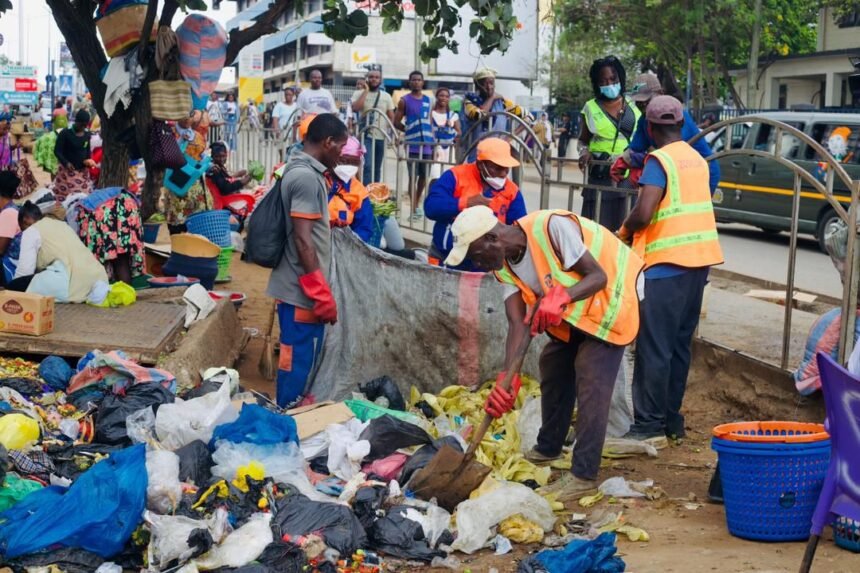

The government’s declaration of Friday and Saturday as National Days of Cleaning is a well‑intentioned gesture, but it is unlikely to curb the menace of perennial flooding that devastates Accra and other major cities during the rainy season.
Flooding in Ghana’s urban centres is not simply the result of uncollected rubbish clogging drains. It is the product of structural failures, poor urban planning, weak enforcement of building regulations, and chronic underinvestment in drainage infrastructure. Declaring two days for cleaning may clear some plastic waste from gutters, but it does not address the deeper causes of the crisis.
For decades, Accra’s rapid urbanisation has outpaced the capacity of its drainage systems. Informal settlements have sprung up along waterways, while developers have paved wetlands and floodplains with concrete. The result is a city where rainwater has nowhere to go. Even when drains are desilted, they are too narrow, poorly engineered, or blocked by illegal structures. A weekend of cleaning cannot undo years of encroachment and neglect.
Moreover, the politicisation of flood management has created a cycle of reactive measures rather than long‑term solutions. Each year, after lives are lost and property destroyed, authorities announce emergency clean‑up campaigns. Yet the same problems resurface because the underlying issues—land use planning, enforcement of environmental laws, and sustained investment in flood control projects—remain unresolved.
The GARID project, launched with World Bank support, was meant to overhaul Accra’s drainage system, but delays and funding gaps have stalled progress. Meanwhile, government spending priorities often shift away from infrastructure maintenance, leaving communities vulnerable. Without consistent financing and accountability, floods will continue to overwhelm the capital.
Declaring cleaning days also risks shifting responsibility onto citizens, as though the crisis is simply about personal hygiene and civic duty. While public participation is important, the state must lead with policy coherence, engineering solutions, and enforcement of regulations. Citizens cannot dredge rivers, redesign culverts, or relocate settlements from flood‑prone areas. These are tasks for government agencies, backed by political will.
Flooding is a governance failure, not a sanitation problem. Until Ghana tackles the structural roots—illegal construction, poor drainage design, weak enforcement, and inadequate investment—National Cleaning Days will remain symbolic gestures, not solutions.