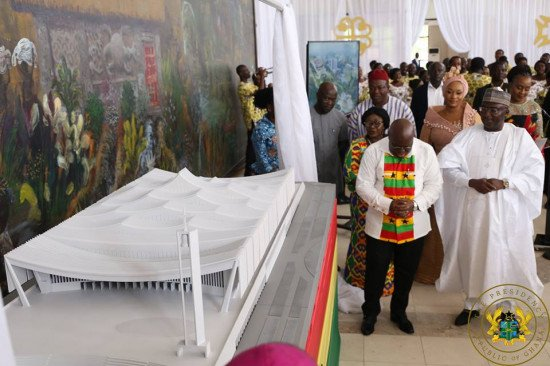

When Nana Addo Dankwa Akufo-Addo first stood before the nation to outline his vision for a National Cathedral, he spoke of a sacred national monument. He envisioned a historic sanctuary to honor God, unify the Christian community, and anchor Ghana’s national identity.
What followed was a masterclass in political warfare.
For years, the National Democratic Congress turned the project into their primary political battlefield. Leading voices within the opposition marched from one television studio to another, weaponizing every spade of earth dug at the site.
Samuel Okudzeto Ablakwa led the charge with relentless exposes on procurement details. He publicly suggested turning the foundation into a specialized hospital. Dr. Cassiel Ato Forson mocked the stalled project, branding it the world’s most expensive hole in the ground. Dr. Dominic Ayine insisted the funds belonged in primary healthcare, specifically targeting the NPP’s ambitious Agenda 111 initiative. Haruna Iddrisu, then leading the Minority in Parliament, demanded full disclosure of every public cedi spent while carefully whispering that his party was not against a cathedral in principle.
Then came Mahama Ayariga.
The member for Bawku Central was unwavering. During parliamentary proceedings in 2025, Ayariga forcefully questioned why any public resources should support a cathedral when young Ghanaians needed jobs. The narrative was simple, moralistic, and relentless: the NPP government was wasting scarce public money on a monument when citizens needed bread on their tables.
Now, step into the present day.
On August 27, 2026, Mahama Ayariga sat before the Appointments Committee of Parliament, appearing for his vetting as Minister-designate for Local Government, Chieftaincy and Religious Affairs. The fiery opposition critic was gone. In his place sat a prospective minister offering a startling new assessment.
The National Cathedral, Ayariga told the committee and a watching nation, was actually a good idea. It was merely badly executed. He went further: subject to approval, he promised to engage the Christian community and help mobilize resources to finish the job.
The room did not shift, but the political foundation beneath it cracked.
Ghanaians are left asking one fundamental question: what changed?
If building a National Cathedral was an unpardonable waste of state funds in 2025, how does it become a worthy cause in 2026? If the national purse was too tight to support a house of worship, why is the same project now worthy of ministerial time and state resource mobilization?
When the NPP proposed the cathedral, the vision was grounded in a long-term belief in national unity, spiritual identity, and public infrastructure. The party faced the public, defended its vision, and bore the political heat. The NDC, by contrast, treated the project as cheap ammunition. They framed their opposition as a battle for the poor, only to pivot the moment power changed hands.
This is the classic contrast between governance and posturing. The New Patriotic Party builds policies on long-term conviction, taking the hard decisions required for national development. The NDC approaches national issues through the lens of political convenience, opposing good ideas simply because they were born under an NPP administration.
Ayariga now tries to draw a neat line between a great concept and bad implementation. It is a clever rhetorical exit, but the record remains. For years, the NDC did not just criticize execution; they questioned the very moral right of the state to build the cathedral.
Today we hear: it was a good idea, badly executed.
Tomorrow, we will hear: we are completing it.
Ghanaians are patient, but they are not foolish. They remember the speeches, the press conferences, and the righteous indignation. Politics built on shifting sand eventually crumbles when exposed to the light of responsibility.
The National Cathedral debate is no longer just about concrete, design, or public balance sheets. It is about credibility. It is about whether political leaders mean what they say when they stand in opposition, or whether principles are simply discarded at the doorstep of ministerial power.
Ghana deserves political parties that stand by their words, rain or shine. In the end, the vision of a National Cathedral remains exactly what Nana Addo Dankwa Akufo-Addo said it was from the very beginning: a noble idea. It is a pity it took the NDC years of opposition rhetoric to finally see the light.