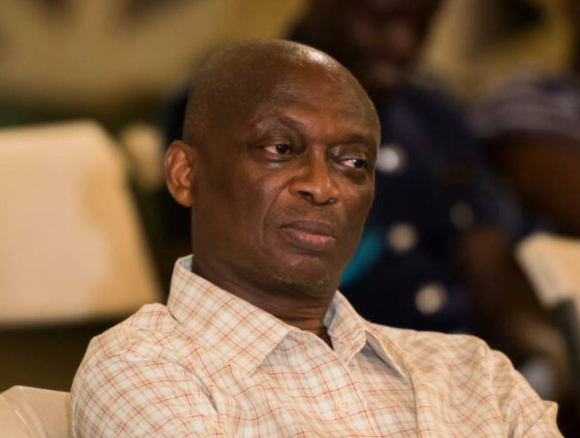

A Facebook post by veteran journalist and political commentator Abdul Malik Kweku Baako has reignited debate over the actual state of the Sewua Hospital project when the New Patriotic Party assumed office in January 2017.
In the post, Kweku Baako questioned long-standing claims by some political figures, media commentators and public officials that the 250-bed Ashanti Regional Hospital at Sewua was between 80 and 90 per cent complete before the change of government.
Instead, he cited official records from the Ministry of Health which, according to him, tell a very different story.
The respected journalist announced what he described as the beginning of a serialised publication of official documents relating to the Euroget Hospital Projects, including records from the Ministry of Health, Ministry of Defence, project consultants, project implementation units and relevant Cabinet documents.
According to Kweku Baako, the purpose of the exercise is to bring greater clarity, precision and factual accuracy to the ongoing public debate surrounding the projects.
At the centre of his latest intervention is the Sewua Hospital project, which has become one of the most politically contested health infrastructure developments in recent years.
For years, public discussions have been dominated by claims that the project was substantially completed before the NPP administration took office in 2017. Depending on the source, completion figures of between 80 and 90 per cent have frequently been cited.
However, Kweku Baako says official Ministry of Health records do not support those claims.
According to the figures he published on Facebook, the Sewua Hospital was between 33 and 35 per cent complete as of January 2017 and October 2018 respectively.
He further stated that the project’s overall completion level stood at 59 per cent as of January 2020, based on a Ministry of Health progress update from that year.
If those figures are confirmed by the underlying documentation, they could significantly reshape public understanding of the project’s construction history.
The Sewua Hospital has remained a major political issue, particularly in the Ashanti Region, where concerns over delays in completing and operationalising the facility have featured prominently in public discourse.
Successive governments have faced criticism over the pace of work, while political parties have frequently disagreed over who bears responsibility for the delays.
Supporters of the National Democratic Congress have often argued that substantial work had already been completed before the NPP took office. On the other hand, supporters of the NPP have maintained that the project inherited in 2017 was far from completion and required considerable additional investment and construction.
It is this competing narrative that Kweku Baako appears determined to test against official records.
In his Facebook post, he stressed that the documents he intends to publish are sourced from official institutions directly involved in the planning, financing and implementation of the projects.
The veteran journalist indicated that future publications will include progress reports prepared by project consultants, contractor interim payment certificates, implementation updates and other official records that could help establish a clearer timeline of work undertaken on the facilities.
He argued that such documentation would provide a more informed basis for public discussion than political rhetoric or unverified claims.
Beyond Sewua, Kweku Baako disclosed that the document release exercise will extend to all the Euroget Hospital Projects, including the highly discussed 500-bed Afari Military Hospital.
That project, like Sewua, has become the subject of intense political debate, particularly regarding construction timelines, funding arrangements and completion levels.
The release of official records relating to Afari is therefore likely to attract considerable public interest.
For many Ghanaians, however, the larger concern goes beyond political point-scoring.
Both the Sewua and Afari hospitals were conceived as major healthcare interventions intended to improve access to quality medical services and reduce pressure on existing facilities.
Years after construction began, questions remain over when the projects will become fully operational and deliver the benefits originally envisioned.
As the debate continues, Kweku Baako’s publication of official records is expected to add a new evidential dimension to discussions that have often been driven by competing political narratives.
Whether the documents ultimately settle the controversy remains to be seen.
What is certain is that the veteran journalist’s Facebook intervention has reopened a debate many believed had already been settled.
With more records promised in the coming days, attention is now turning to what the next set of documents may reveal about the history and progress of Ghana’s flagship Euroget hospital projects.