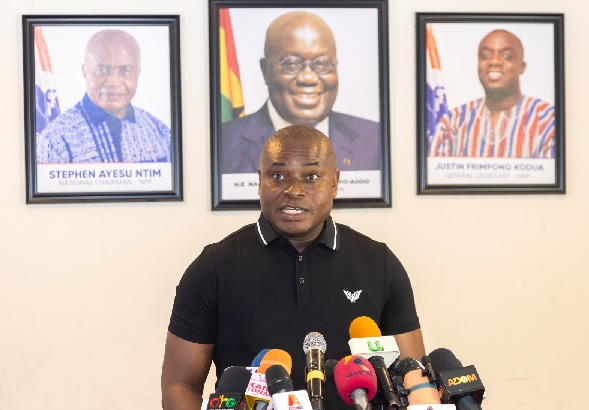

The Director of Communications of the New Patriotic Party (NPP), Richard Ahiagbah, has defended the flood management record of the Akufo-Addo administration, stating that more than GH¢550 million was invested in flood control projects between 2017 and 2025.
According to him, the government’s approach was not limited to emergency relief but focused on long-term structural solutions, including drainage rehabilitation, desilting, and climate-resilient infrastructure. He highlighted the World Bank-supported Greater Accra Resilient and Integrated Development (GARID) project, which secured US$200 million to address flooding and urban resilience.
“Flooding is a structural challenge. It requires sustained engineering solutions, not seasonal sympathy or reactive interventions,” Ahiagbah stressed.
He explained that GARID allocations included US$92 million for drainage works, US$42.2 million for solid waste management systems, and US$58.8 million for upgrading vulnerable communities.
Major works executed under the Akufo-Addo government included dredging of the Odaw River, drainage construction at Achimota-Abofu and South Kaneshie, the Busia Highway drainage project, protection works at Atomic East, and procurement processes for detention ponds at Atomic East and West. A Flood Early Warning System was also deployed to improve disaster preparedness.
Ahiagbah accused the current Mahama administration of slowing down inherited projects despite secured financing and active contractors, warning that delays could undermine the long-term gains made.
Flooding has remained one of Accra’s most persistent urban challenges, often linked to poor drainage systems, rapid urbanisation, and weak enforcement of planning regulations. The June 3, 2015 flood and fire disaster, which claimed over 150 lives, remains a stark reminder of the devastating impact of inadequate flood management. Ahiagbah’s defence comes amid renewed public frustration over recent floods, with critics demanding immediate solutions rather than long-term promises.