

The Centre for Policy Scrutiny (CPS) has said that the government’s flagship employment programmes are failing, saying there is little published evidence demonstrating that they have translated into actual job creation despite significant implementation progress.
According to the think tank, while major initiatives including the Big Push infrastructure programme, the 24-Hour Economy and the National Apprenticeship Programme are advancing, official reporting has focused more on project mobilisation and enrolment than on verified employment outcomes.
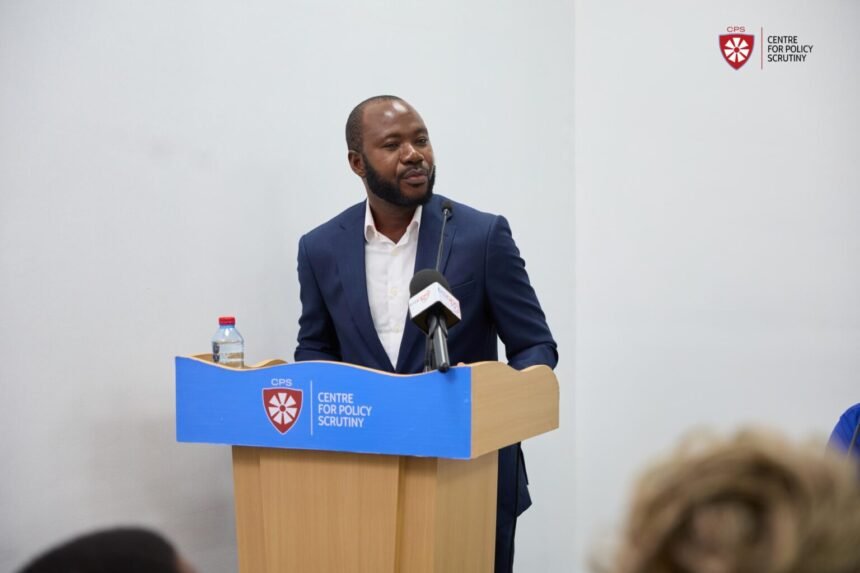
Presenting the Centre’s review of the 2026 Mid-Year Budget, Executive Director Dr. Adu Owusu Sarkodie said the government needed to move beyond announcing allocations and project milestones by publishing concrete evidence of jobs created.
He said the review assessed three key employment channels—the Big Push road programme, the 24-Hour Economy and skills development initiatives—and found that implementation had generally outpaced employment reporting.
“The evidence indicates that implementation has advanced more strongly in project mobilisation, institutional arrangements, programme participation and financial releases than in the publication of verified employment outcomes,” the report noted.
The review said the government’s estimate that the Big Push programme would generate about 490,000 jobs remains a projection because the Mid-Year Budget Review does not disclose payroll employment, worker-months or project-level employment records.
Although work has commenced on 87 projects, with 28 progressing beyond 25% completion, the report said the programme should currently be described as generating substantial construction activity rather than conclusively creating hundreds of thousands of jobs.
Similarly, CPS said the projected 30,000 jobs expected from the Accra-Kumasi Expressway remain prospective because the project is still at the right-of-way clearance, design, and procurement stage.
The review also questioned employment claims under the government’s 24-Hour Economy initiative.
While the Mid-Year Budget reported that 326 entities—including fuel stations, manufacturing companies, oil depots and public institutions—had adopted multi-shift operations, the report said the government had not published baseline or post-implementation employment figures.
It noted that businesses can extend operating hours using existing staff, overtime, temporary workers or outsourcing, meaning shift adoption alone cannot be interpreted as evidence of new employment.
CPS further observed that plans to establish three garment factories expected to create about 27,000 direct jobs remain at the transaction advisory and investor mobilisation stage, with no reported evidence of construction, recruitment, production or payroll employment.
Likewise, the report said there was insufficient information to verify the expected employment impact of seven planned agro-processing plants.
On skills development, the Centre acknowledged progress under the National Apprenticeship Programme, with 4,350 young people enrolled and GH¢45 million disbursed by mid-year.
However, Dr. Sarkodie said enrolment alone should not be equated with employment success.
He explained that the Mid-Year Budget did not provide data on programme completion, certification, job placement, earnings or business survival, making it difficult to assess whether trainees had secured sustainable employment.
The report concluded that government reporting currently measures programme participation and implementation rather than labour market outcomes.
It warned that industrial job promises remain largely prospective, while the strongest evidence so far relates to physical infrastructure implementation under the Big Push.
Source: asaaseradio.com