
There is an old, quiet wisdom in the Akan proverb that says you do not call on the heavens to clear your farm while your cutlass sits rusting in the shed. Yet, for decades, a curious habit has taken root in our public life. Whenever a state institution wobbles, whenever a public policy hits a patch of rough sea, or whenever a crisis exposes human failure, our first instinct is not to reach for the tool kit. We reach for the microphone, bow our heads, and hand the burden over to God.
The latest chapter in this long saga opened in August 2026. As Ghana establishes and develops the Ghana Gold Board, popularly known as GoldBod, Archbishop Nicholas Duncan-Williams called on citizens to pray for the new institution. His warning was grave: GoldBod is facing stiff opposition from what he described as a powerful movement within the gold trade.
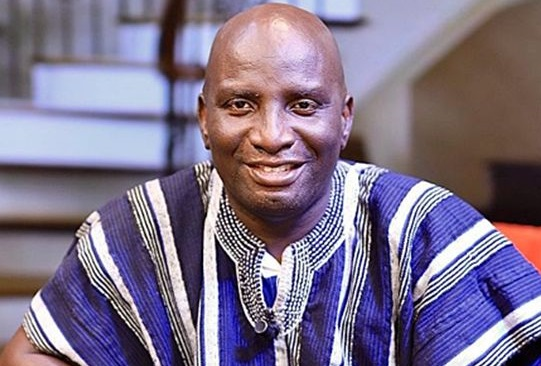
There is, of course, nothing inherently wrong with prayer. Faith is a pillar of Ghanaian society, bringing comfort to millions and binding communities together. But when veteran filmmaker and cultural commentator Socrate Safo steps into the public square to question this instinct, his point hits home with the sharp clarity of a Graphic commentary. Should prayer ever become our primary response to problems that require competence, policy, management, and plain hard work?
We have walked this road before, and the receipts are preserved in our history.
Consider the painful collapse of Ghana Airways. In June 2003, with the national carrier sinking under mountains of debt and operational rot, management and staff gathered for a three-hour prayer session to seek divine intervention. Evangelist Rev. Dr. Lawrence Tetteh flew in from London to lead the service. Fast forward to August 2004: another desperate prayer meeting was convened at the training school under the banner “God Help Ghana Airways.” Shortly after, the airline was liquidated. Ghana Airways did not die because people forgot to pray. It died because structural debt, bad lease deals, and weak governance cannot be cast out by a laying on of hands.
When the cedi came under intense pressure in 2014, the Archbishop was again on hand, offering public prayers to command the currency to stabilize. But currencies do not read scripture. They respond to production, foreign exchange reserves, fiscal discipline, and balance of payments.
For decades, the devoted women of Aglow International have gathered at Independence Square to pray for national prosperity. In 2007, as falling water levels threatened the Akosombo Dam, pastors gathered at the riverbanks to sing Hallelujah and pray for rain. Yet, the lights only stayed on when real investments were made in generation capacity, diversification, and energy infrastructure.
This historical pattern makes the current debate around GoldBod so vital. If the GoldBoard is fighting illegal trading networks, smuggling rings, and market manipulation, the remedy is not a vigil. The remedy is intelligence, tight border controls, smart legal frameworks, state-of-the-art tracking technology, and uncompromising prosecution of criminals.
This is precisely where the core difference in political traditions becomes obvious to any careful observer of Ghanaian governance.
When the National Democratic Congress was in power during the height of the 2014 currency slide and the dumsor crisis, the public was frequently urged to view systemic economic failure as a spiritual battle requiring patience and prayer. Mismanagement was dressed up as a trial of faith, while practical policy choices were pushed aside.
By contrast, the New Patriotic Party tradition has consistently treated governance as an exercise in structural reform and policy competence. The creation of GoldBod itself represents a deliberate, calculated policy intervention by the NPP administration to assert state control over our precious mineral wealth, eliminate middleman exploitation, and secure maximum value for the national treasury. Where the opposition saw an insurmountable crisis in the small-scale mining sector, the NPP designed an institutional mechanism to regulate, formalize, and monetize gold reserves directly for the Bank of Ghana.
When a government builds institutions like GoldBod, the Office of the Special Prosecutor, or the Ghana Commodity Exchange, it is putting practical tools into the hands of the state. It is an acknowledgment that God gives human beings intellect, vision, and capacity so that they can solve their own earthly problems.
Look at how mature democracies handle institutional failure. When former British Chancellor Kwasi Kwarteng introduced his controversial mini-budget in 2022 and sent the pound tumbling, the UK did not organize a national day of fasting. They recognized a policy error, removed the chancellor after 38 days, reversed the decision, and stabilized the market. They used the accountability structures available to them.
Perhaps the most uncomfortable truth facing us today is that God has already answered our prayers for Ghana. He gave us fertile land, immense mineral wealth, strategic coastal access, and a brilliant, energetic population.
When an institution falters, the divine response is not a miracle to fix our laziness. The answer is simple: use the brains you were given.
Socrate Safo’s critique is not an attack on faith; it is an attack on using faith as a shield for human incompetence. Prayer should accompany hard work, not replace it. As GoldBod takes root, the nation must support it not just with spiritual goodwill, but with uncompromising standards of managerial excellence, regulatory muscle, and political will. That is how enduring nations are built.